
Last updated September 22, 2026
Free on-site gate assessment - hinges, posts, and your LiftMaster or Nice gate operator checked before anything is quoted
The assessment is free and the quote is the invoice.
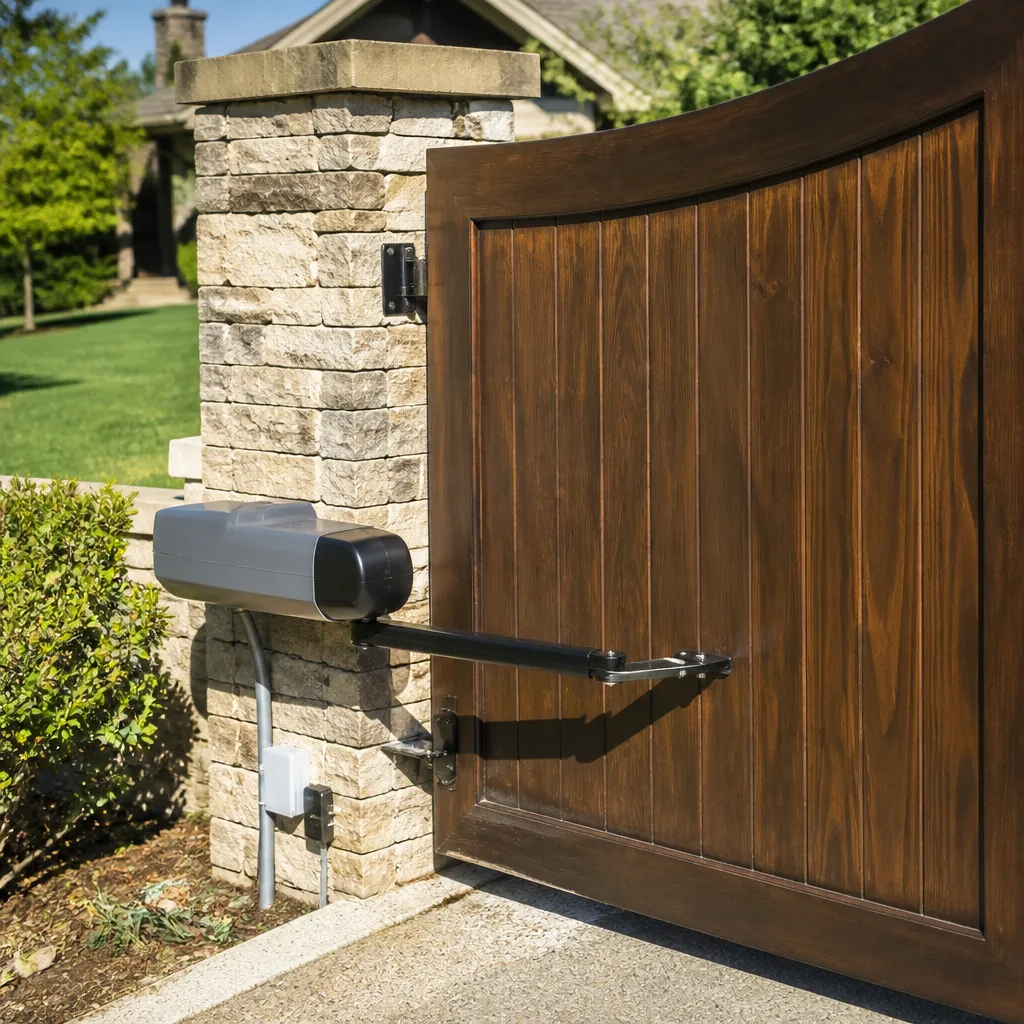
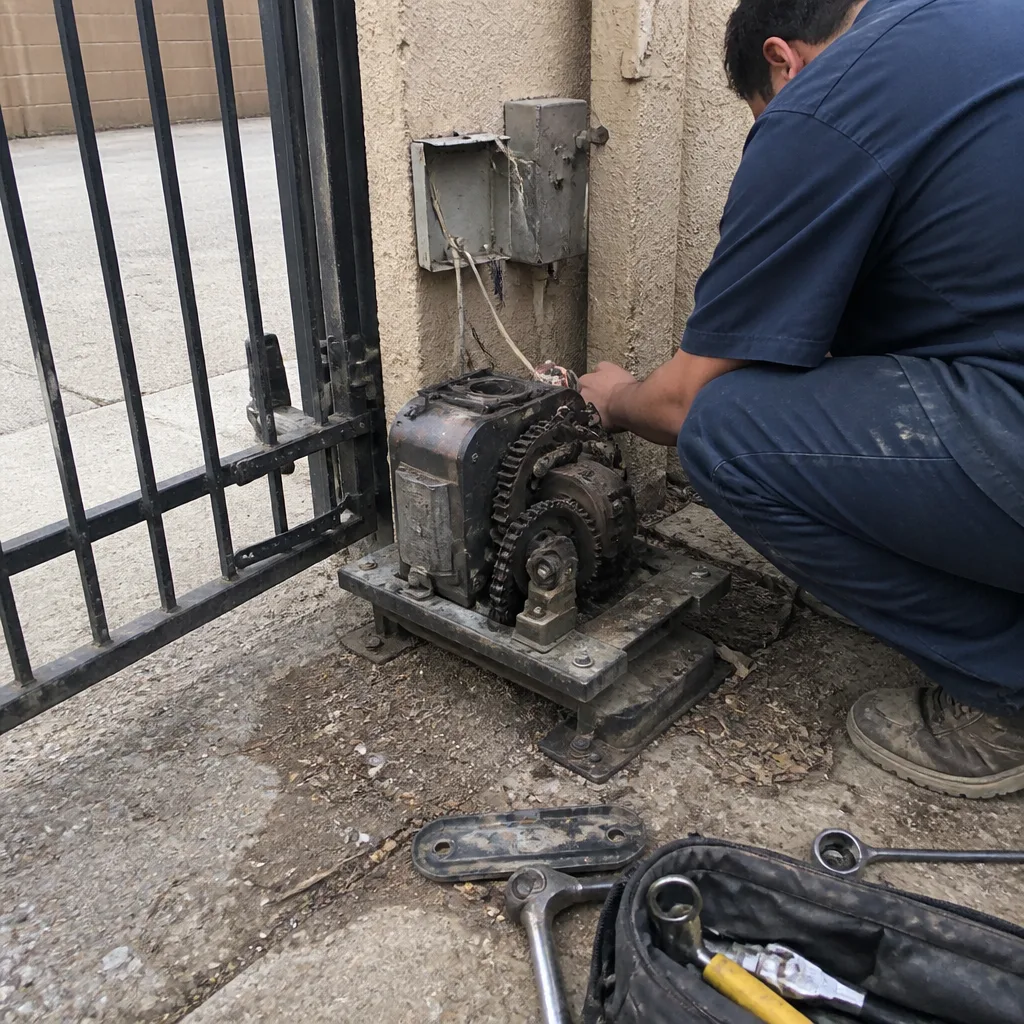 Before
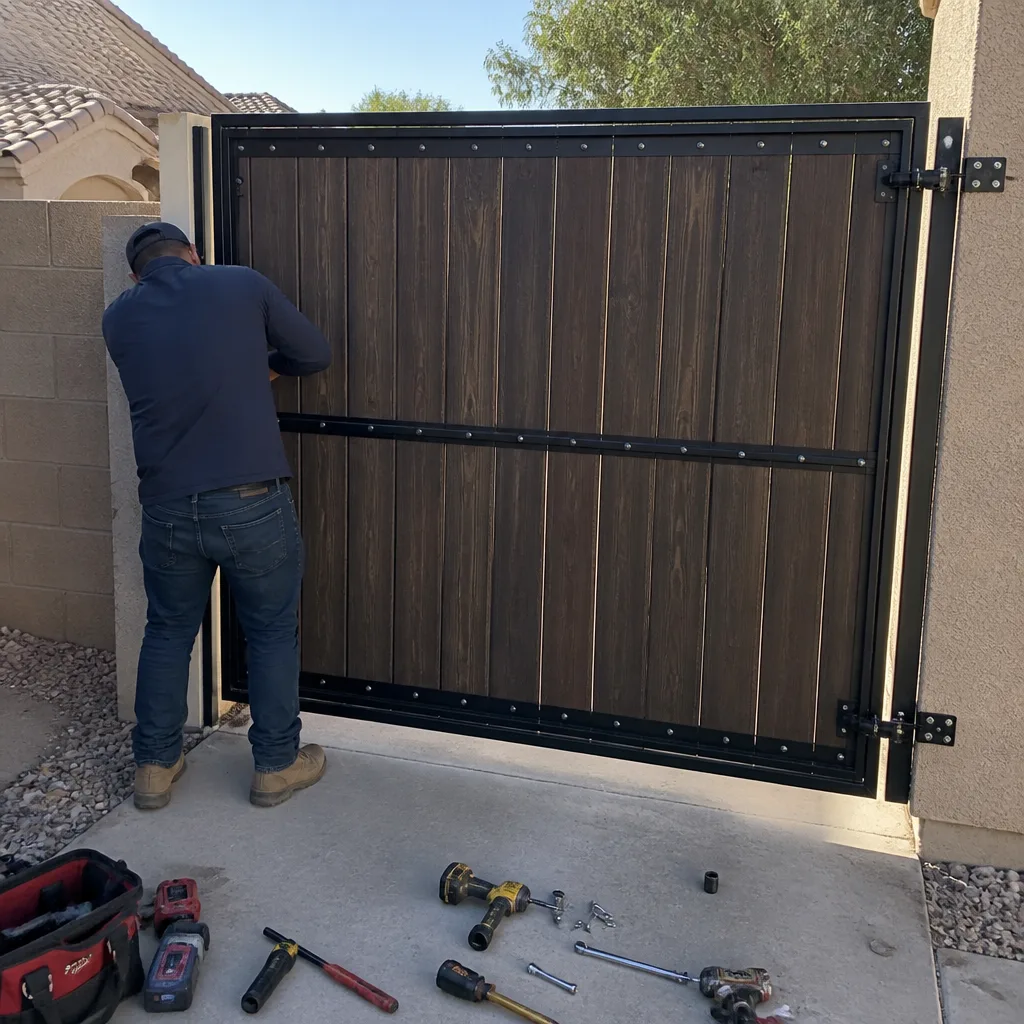 After
After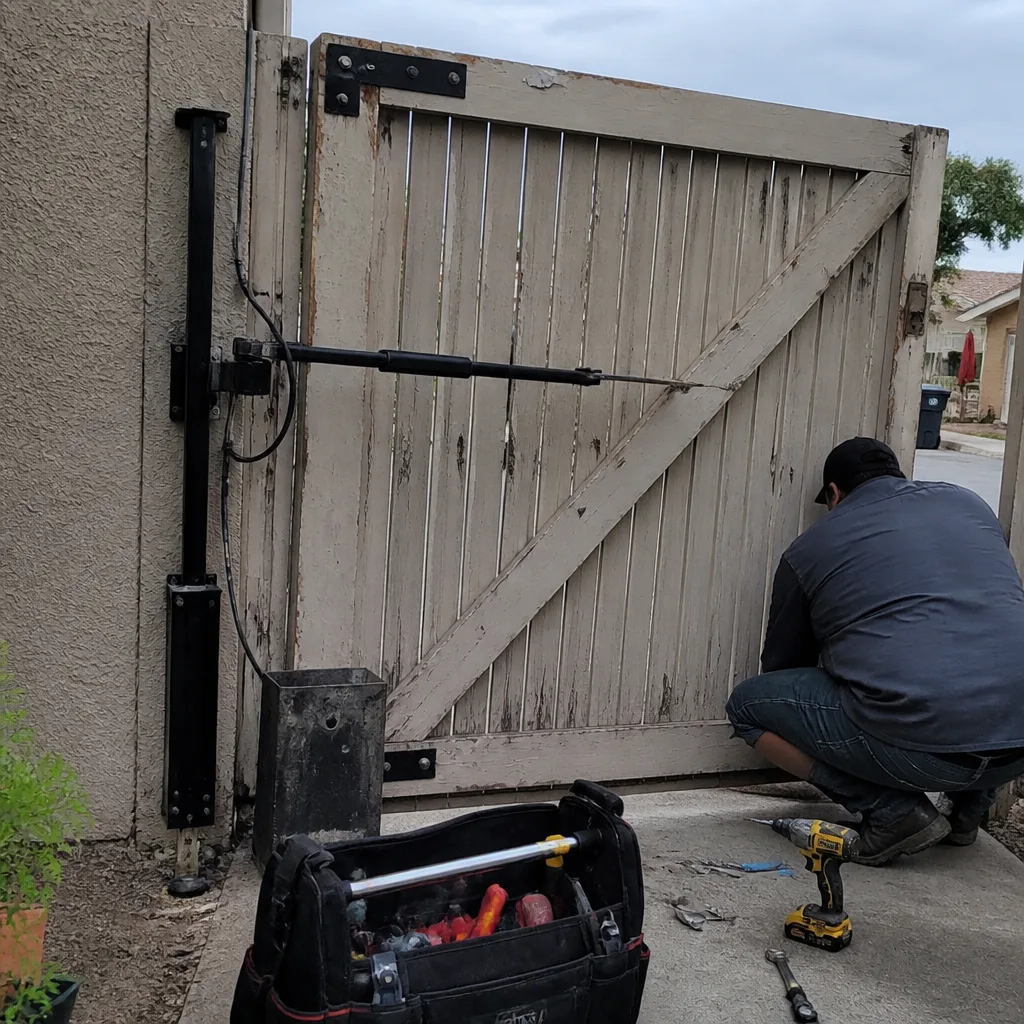 Before
 After
After Before
 After
AfterSeasonal Gate Repair Care for Chandler: Year-Round Homeowner’s Guide
More Chandler gate operators fail in the first two weeks of June than in any other two-week period - not because summer arrived, but because April and May quietly pushed motor temperatures past sustained operating limits that owners never measured because the gate was still opening. In Chandler, we don’t have four seasons. We have three gate-relevant stress periods: the pre-summer heat ramp, the monsoon dust and moisture cycle, and the mild-weather false security window when deferred maintenance hides in plain sight. This guide maps each period to specific tests, maintenance tasks, and documentation habits that keep residential gates running through the extremes that define desert automation. For hands-on help, explore our Gate Repair services.
Quick Answer
Seasonal gate care in Chandler means running a pre-summer motor and battery audit in April-May, sealing and clearing ground-loop debris before July monsoons, and scheduling mechanical repairs during October-March when cooler temperatures allow accurate torque calibration and proper adhesive curing. Homeowners who document each inspection with dated photos and temperature readings build a service history that cuts diagnostic time and cost on every future repair call, as detailed in The Complete Guide to Gate Repair in Chandler.
Table of Contents
- The Pre-Summer Heat Ramp: April-May Audit Window
- Monsoon Preparation: July-September Dust and Moisture Defense
- The Mild-Weather False Security: October-March Repair Window
- Using Chandler’s Temperature Curve to Set Real Maintenance Intervals
- Building a Documented Seasonal Log That Saves Money
- Common Mistakes to Avoid
- When to Call a Professional
- Frequently Asked Questions
BeforeAfterThe Pre-Summer Heat Ramp: April-May Audit Window
The deadliest period for Chandler gate operators isn’t June or July. It’s the six weeks before, when average daily highs climb from 85°F to 105°F and motors that tested “fine” in March begin running at thermal margins they were never designed to sustain. By the time a motor fails in early June, the damage started in late April.
We see this pattern repeatedly in Chandler neighborhoods from Ocotillo to Fulton Ranch: the gate opens slower, the owner notices nothing, and the thermal overload switch - designed as a last resort, not a regular cycling mechanism - starts tripping weekly. Then it stops tripping because the motor windings have degraded past the point of protection.
The Three-Part Pre-Summer Audit
Run this audit in late April, before sustained triple-digit temperatures arrive. Record everything; the baseline you establish here is what you’ll compare against in September.
- Motor temperature test. After five consecutive open-close cycles, touch the motor housing with an infrared thermometer (available for $25-$40 at hardware stores). A healthy operator in Chandler spring conditions should read under 140°F. Readings above 160°F indicate insufficient ventilation, failing capacitors, or a motor approaching end of life. We log this reading on every pre-summer service call; motors that test at 155°F in April typically fail by mid-June.
- Battery load test. Arizona heat degrades gate batteries faster than cold. A fully charged 12V battery should hold 12.6V at rest and not drop below 10.5V under load. Test with a $20 battery load tester. Replace any battery reading below 12.4V at rest; in Chandler’s summer, a marginal battery becomes a dead battery within weeks, often leaving the gate inoperable during a power outage when you need it most for security.
- Photo documentation routine. Photograph the motor nameplate (model, serial, voltage), the battery date code, the limit-switch position, and the photo-eye alignment gap. Store these with the date in a dedicated folder. When you call for service in September, this record eliminates 15-20 minutes of diagnostic time and often prevents an unnecessary part replacement.
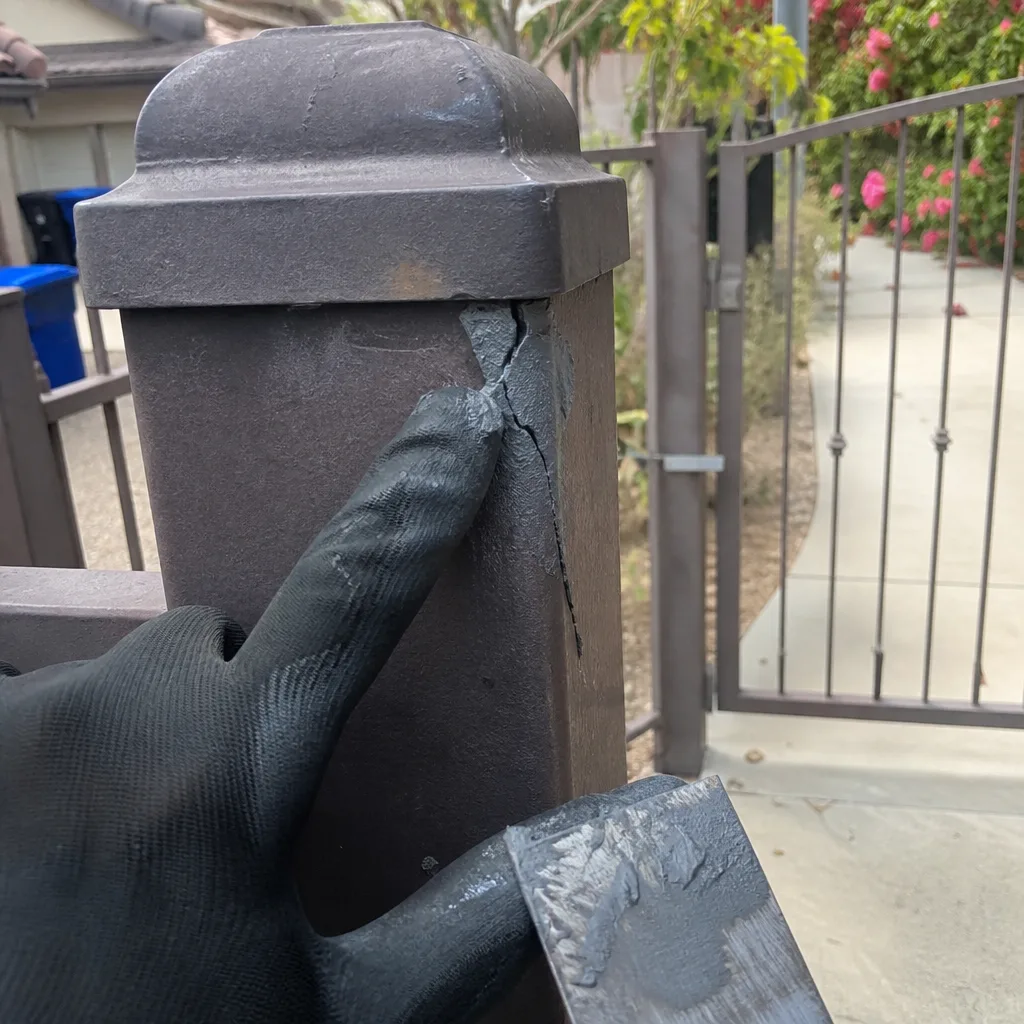
For swing gates, check the arm bracket for cracks that thermal expansion will widen. For slide gates, measure chain sag: 1-2 inches of mid-span deflection is normal; more than 3 inches means the chain will skip teeth when metal expansion tightens everything in June. Gate repair in Chandler calls spike precisely because this simple measurement wasn’t made in April.
If your operator is a FAAC, BFT, or Linear model, verify that the thermal protection settings match the manufacturer’s desert-climate supplement. Many units ship with default profiles written for 85°F ambient; the adjustment takes five minutes with the programming wand and prevents hundreds of dollars in thermal damage.
Monsoon Preparation: July-September Dust and Moisture Defense
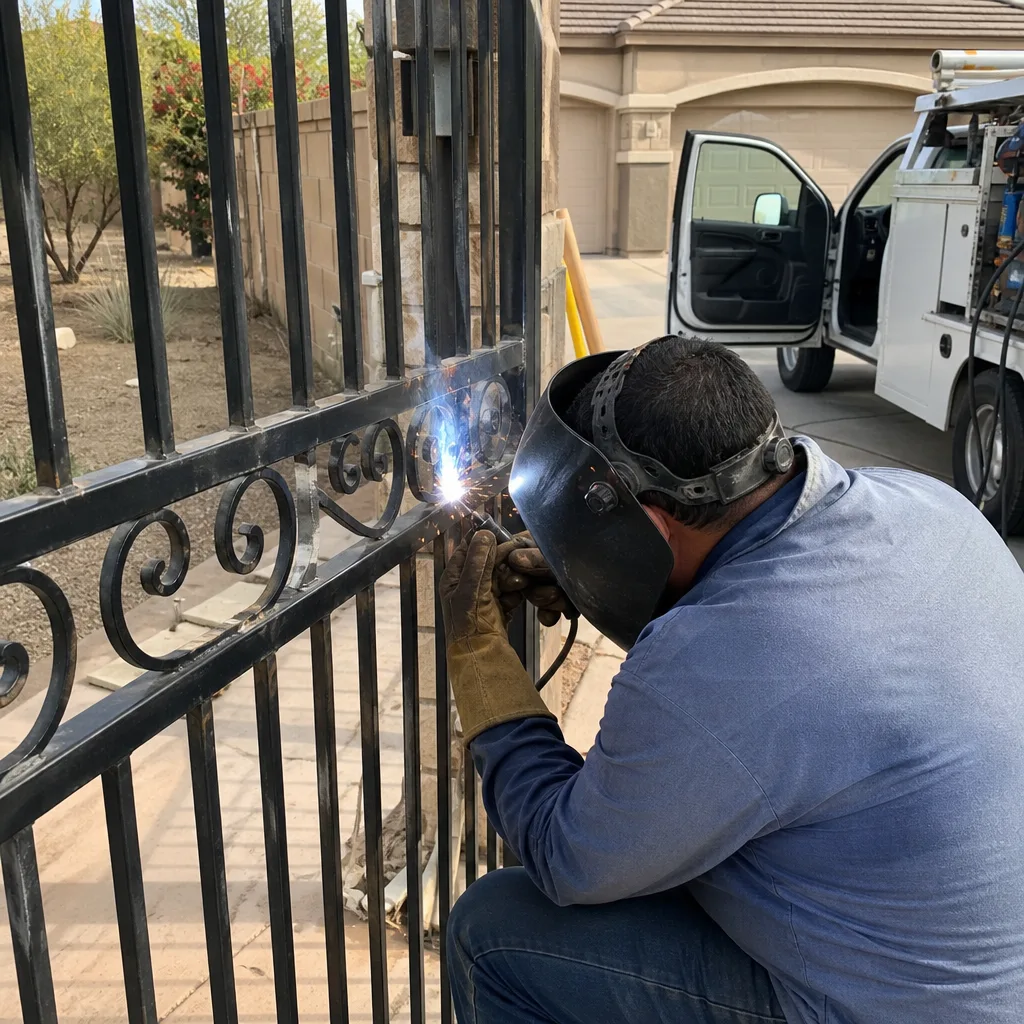
Chandler’s monsoon season delivers two distinct threats to gate automation: conductive dust that bridges circuit boards, and rapid water intrusion that pools where caliche soil refuses to drain. The combination is uniquely destructive because dust settles first, then moisture turns it into a conductive paste.
In 2023, we documented seventeen gate operator failures in Chandler during the week of July 15-22 alone. Fourteen involved control boards with dust-moisture bridging between relay terminals. The boards weren’t defective. They were unsealed in an environment that demands sealing.
What to Seal
- Control board enclosure. If your operator has a vented cover, replace it with a sealed NEMA 3R enclosure or add a conformal coating spray to the board itself. Cost: $12-$25. Typical board replacement cost if moisture bridges the relays: $340-$680 depending on brand.
- Conduit entry points. Where low-voltage wiring enters the operator housing, apply silicone sealant rated for 200°F continuous. Standard caulk softens in Chandler summer heat and flows away from the joint.
- Photo-eye housings. Check that the rubber gaskets seat fully. A gap of even 1/16 inch admits enough blowing dust to obscure the infrared beam intermittently, causing “phantom obstruction” errors that are maddening to diagnose without a documented baseline.
What to Clear from Ground Loops
The induction loop embedded in your driveway communicates with the operator to open the gate or hold it open when a vehicle is present. Monsoon debris blocks this signal in two ways:
- Metal debris (nails, screws, rebar fragments from nearby construction) creates false positives, holding the gate open when no vehicle is present.
- Organic debris packed into the saw-cut groove swells when wet, lifting the loop wire and breaking the continuous circuit.
Before July, sweep the loop path with a magnet on wheels (available at auto parts stores) and clear the groove with a narrow putty knife. In Chandler’s newer developments, particularly around Andersen Springs and Clemente Ranch, construction debris in loop grooves is the leading cause of erratic gate behavior during monsoon season.
Standing Water and Caliche Soil Stability
Chandler’s caliche layer - the cemented calcium carbonate deposit common at 18-36 inches depth - creates a perched water table that keeps moisture against gate posts for days after surface water appears to have evaporated. For slide gates, this means post footings that were stable in April may shift by August as expanding clay soils push against the concrete.
Check your gate posts in late June: if the post base shows a new crack, or if the gate now drags at a specific point in its travel that it didn’t in May, the footing is moving. This is not a lubrication problem. Adding grease will mask the symptom until the post leans far enough to bind the gate completely. Gate installation in Chandler for post replacement runs $800-$1,400 depending on concrete depth and gate weight; catching movement early often allows stabilization for under $300.
The Mild-Weather False Security: October-March Repair Window
From October through March, Chandler’s average highs range from 65°F to 78°F. Gate operators run cool, chains contract to proper tension, and batteries hold charge with little effort. This is precisely why it’s the most dangerous period for long-term gate health.
Problems don’t announce themselves. They accumulate invisibly until April’s heat ramp forces a crisis. We call this the false security window, and it’s when the highest-value maintenance gets deferred because the gate “seems fine.”
Why Cool Weather Enables Better Repairs
Three mechanical processes work better in Chandler’s mild season:
- Torque calibration. Operator force settings (the amperage threshold that determines when the gate reverses on obstruction) are calibrated with the gate at operating temperature. In summer, a gate calibrated hot will over-travel when cold; calibrated cold, it will under-travel and falsely reverse when hot. October calibration holds accurate through the widest seasonal range.
- Adhesive curing. Post caps, rubber bumpers, and certain bracket repairs use structural adhesives that require 24-48 hours at 60-80°F to reach full strength. July repairs with these adhesives often fail within weeks because 105°F ambient accelerates surface curing while leaving the bond line weak.
- Grease placement. High-temperature lithium grease applied in summer runs off vertical surfaces before it plates the metal. Applied in November, it stays where placed and provides lubrication through the following summer.
The October Maintenance List
- Remove and inspect all rollers and hinges. Look for brinelling (pitted bearing races) and replace any component with visible wear. In Chandler’s dry climate, dust infiltration causes bearing failure before rust does.
- Check the gate’s level and plumb with a 4-foot level. Seasonal thermal cycling shifts posts; October correction prevents the binding that appears in May.
- Test the safety edge (the pressure-sensitive strip on the gate’s leading edge) with a 2×4 block. The gate should reverse within 2 seconds of contact. Delayed reversal indicates a failing edge sensor or degraded wiring in the hinge loop.
- Verify that the manual release mechanism operates smoothly. If the power fails during a winter storm, you’ll need this to work under stress.
For gate motor and opener service in Chandler, October through December is our recommended window for major adjustments, gear replacements, and control board upgrades. The work holds its calibration, and you’re not paying emergency rates for a failure that predictable maintenance would have prevented.
Using Chandler’s Temperature Curve to Set Real Maintenance Intervals
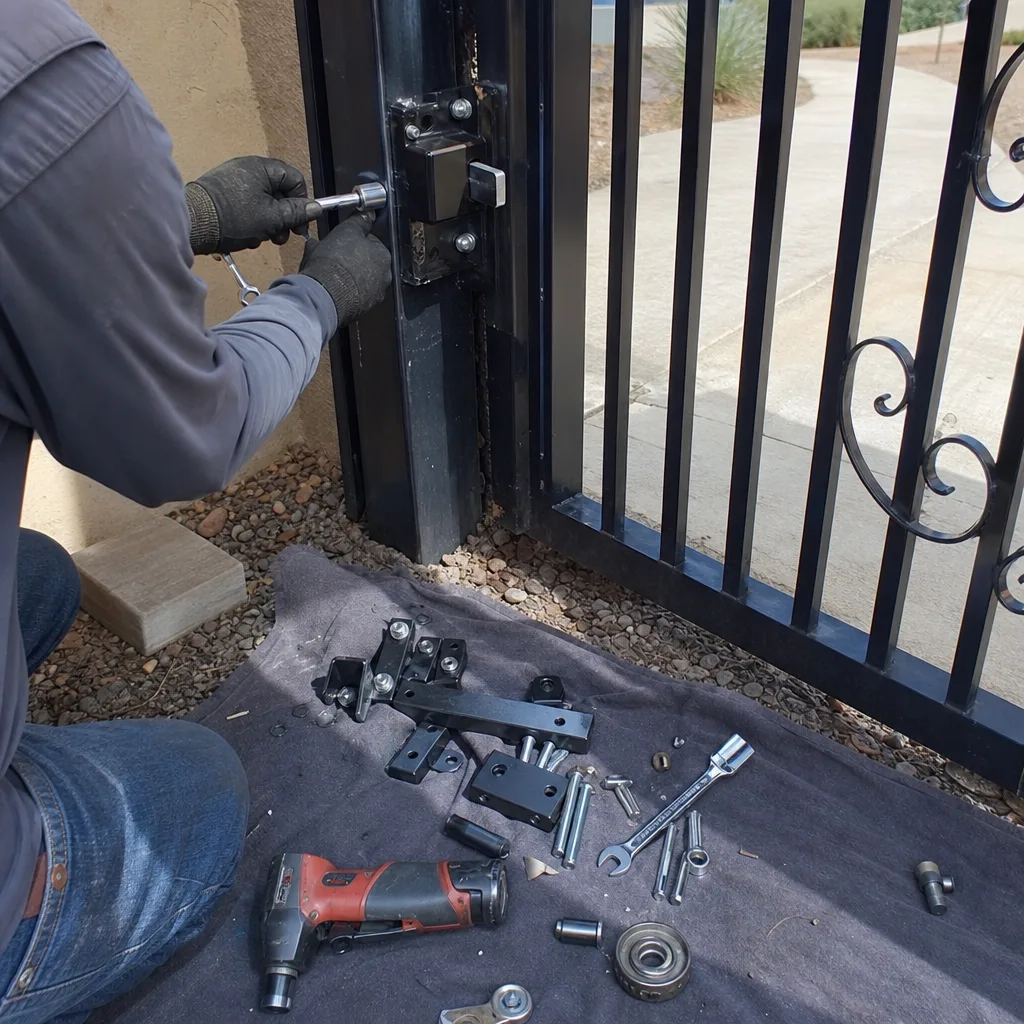
Manufacturer maintenance schedules are written for moderate climates: 65°F average, moderate humidity, minimal dust. Chandler violates all three assumptions. Using the manufacturer’s interval without climate adjustment is like using a sedan maintenance schedule for a taxi.
Chandler’s average monthly high temperatures tell the real story:
| Month | Avg. High | Gate System Stress | Recommended Action |
|---|---|---|---|
| January | 67°F | Minimal | Full mechanical inspection, grease application |
| February | 71°F | Minimal | Post stability check after winter rains |
| March | 78°F | Moderate | Begin pre-summer documentation |
| April | 86°F | Increasing | Motor temperature baseline, battery test |
| May | 95°F | High | Final seal check, ventilation verification |
| June | 104°F | Critical | Monitor for thermal trips, no major adjustments |
| July | 106°F | Critical + monsoon | Ground loop clearing, enclosure inspection after storms |
| August | 104°F | Critical + monsoon | Post-storm moisture check in operator housing |
| September | 99°F | High, decreasing | Compare motor temps to April baseline |
| October | 88°F | Moderate | Full calibration window opens |
| November | 75°F | Minimal | Torque calibration, adhesive repairs |
| December | 67°F | Minimal | Manual release test, safety edge verification |
This schedule replaces the generic “annual service” recommendation with Chandler-specific timing. The critical months of June-August are for monitoring and minor adjustments only; major work done in 105°F heat will need recalibration by October anyway.
For Viking and Ghost Controls operators specifically, the thermal protection profiles should be verified against this temperature curve. Both brands offer desert-climate programming extensions that many installers never enable. A five-minute programming change in April prevents a $400 motor replacement in July.
Building a Documented Seasonal Log That Saves Money
Every Vance Gate Repair Chandler service call begins with the same question: “What’s the history?” Homeowners who can produce a dated photo log get faster diagnosis, more accurate quotes, and fewer unnecessary parts. Under The Haven Standard, we document every visit; homeowners who maintain their own seasonal log double the value of that documentation.
The Log Format
Create a simple digital folder structure:
- YYYY-PreSummer (photos: motor nameplate, temp reading, battery voltage, limit switch position, photo-eye gap measurement)
- YYYY-Monsoon (photos: sealed enclosures, ground loop condition, post-base cracks, post-storm operator housing interior)
- YYYY-MildWeather (photos: roller/hinge condition, gate level, safety edge test with 2×4, manual release operation)
Each photo filename should include date and reading: 2024-04-28_MotorTemp_142F.jpg. This naming convention lets any technician - us or another company - instantly understand what changed and when.
What a Good Log Prevents
In January 2024, a Chandler homeowner in Cooper Commons called with a gate that reversed halfway through its travel. Our technician found the limit switch had been moved 3 inches from its documented position. The homeowner’s log showed the exact setting from April 2023. We reset to that position, verified operation, and photographed the restored setting. Total time: 22 minutes. Without the log, we’d have measured travel distance, tested force settings, and potentially replaced a functional limit switch on speculation. The log saved approximately $180 in unnecessary diagnostic labor.
The Haven Standard Clause 4 requires that we leave every homeowner with a photo record of our work. Homeowners who maintain their own parallel log create a complete chain of evidence that survives any single company’s record-keeping. When you sell your home, this documentation transfers to the new owner and protects your disclosure. When you call for warranty work, it proves the timeline.
Common Mistakes to Avoid
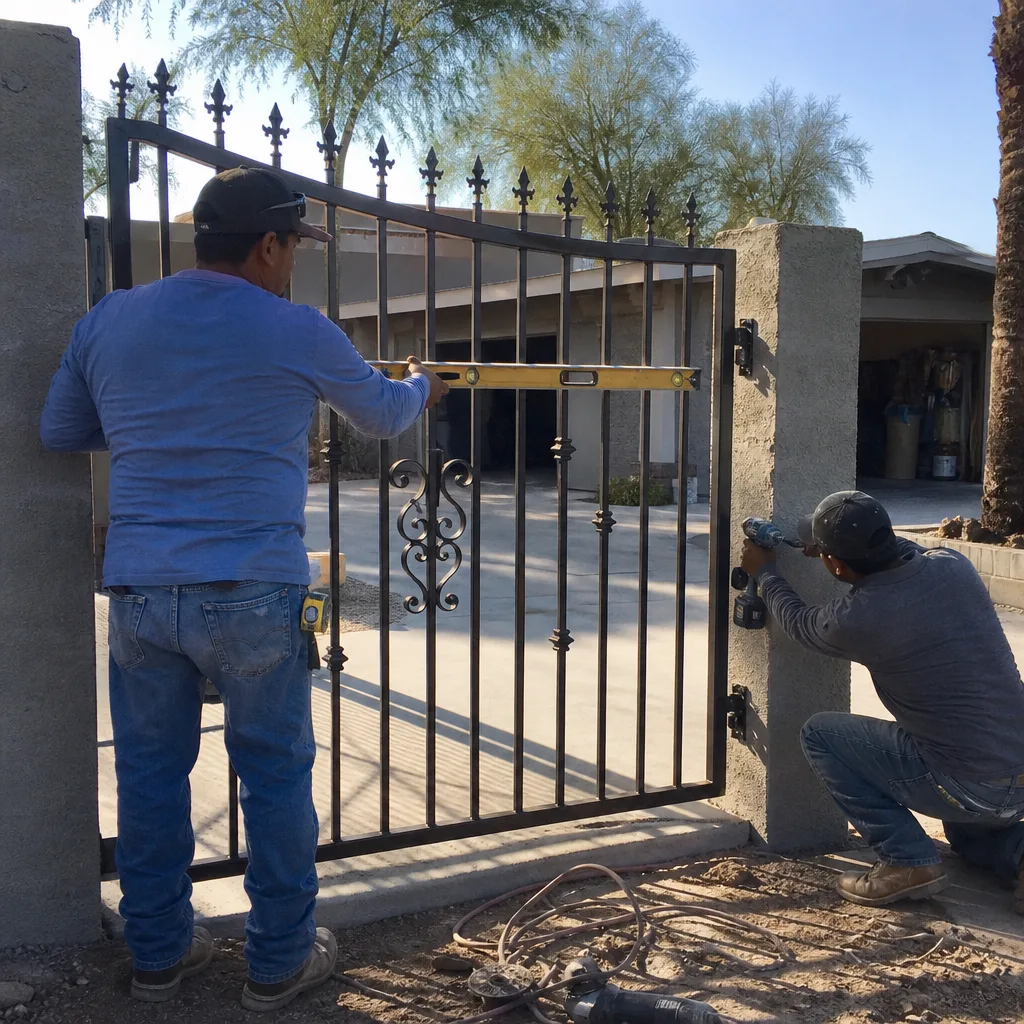
- Waiting for the gate to fail before calling. In Chandler, a gate that “works fine” in March can be thermally compromised by May. The failure in June is the symptom; the damage happened two months earlier. Schedule the April audit before you need it.
- Using all-purpose spray lubricant on gate components. WD-40 and similar products evaporate within days in Chandler’s dry heat and attract dust that accelerates wear. Use white lithium grease for metal-to-metal contact and silicone spray for weatherstripping and plastic rollers.
- Ignoring the battery until the gate stops during a power outage. Arizona heat degrades batteries predictably. A battery that tests marginal in April will fail in July. Replace on schedule, not on failure.
- Power-washing the operator housing to “clean” it. Monsoon moisture is bad enough; directed water pressure forces water past seals that casual rain won’t breach. Clean the exterior with a damp cloth only.
- Calibrating force settings in summer heat. Metal expands, grease thins, and the gate moves easier when hot. Settings made in August will cause false obstruction reversals in January. Calibrate in October-November for year-round stability.
- Storing the remote in a car parked in direct sun. Chandler vehicle interiors reach 160°F; gate remote batteries and solder joints fail prematurely. Keep remotes in a bag or console, not the dash.
- Assuming a new gate doesn’t need inspection. Installation settling, concrete curing, and initial wear-in all happen in the first 12 months. A gate installed in February should be inspected in October, not “next year.”
When to Call a Professional
Some conditions require trained diagnosis and specialized tools. Call for service when: the motor housing exceeds 170°F after five cycles; the gate binds at the same point in travel regardless of temperature; the operator displays fault codes that reset but return within 48 hours; the manual release requires force that risks injury; or the safety edge fails to reverse the gate on contact with a rigid object.
High-tension spring-assisted gates and cantilever slide gates with counterbalance systems carry genuine injury risk from uncontrolled release. Do not attempt adjustment without proper winding bars and training.
Vance Gate Repair Chandler offers free estimates in Chandler - call (520) 827-3159. Every estimate includes a written scope and price before any work begins, under Haven Standard Clause 1. Our live answering is available at any hour; there is no voicemail queue.
Frequently Asked Questions
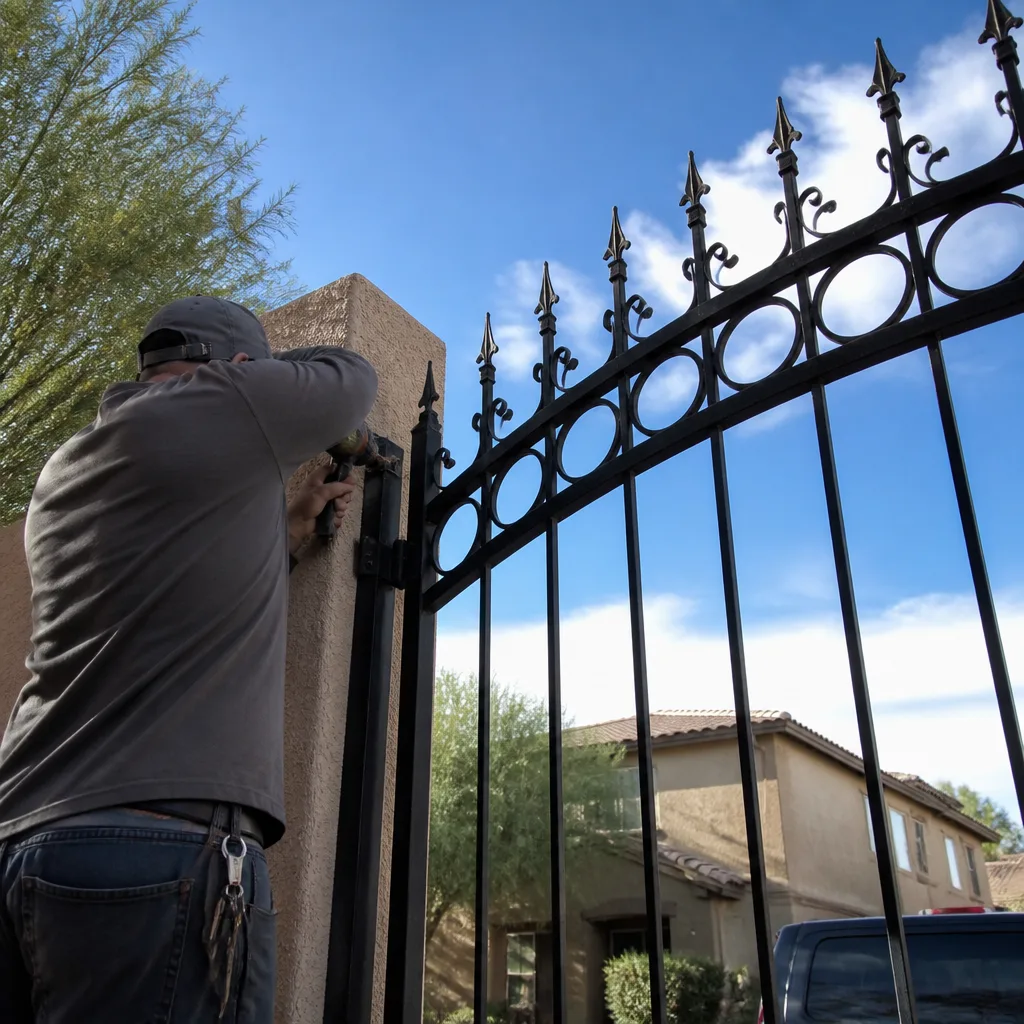
Professional seasonal maintenance in Chandler typically runs $150-$280 for a single visit covering inspection, lubrication, safety testing, and documentation. A three-visit annual plan (pre-summer, monsoon, mild-weather) averages $380-$520 when scheduled in advance. Call (520) 827-3159 for an exact quote on your specific gate type and brand - estimates are free and include a written price before any commitment.
Yes, with basic tools: an infrared thermometer, battery load tester, and smartphone camera. The motor temperature test, battery voltage check, and photo documentation are all homeowner-accessible. What we add as professionals is interpretation (is 155°F normal for this brand or a warning sign?), torque calibration with a metered tool, and the documented record that transfers with your property. Many Chandler homeowners do the April audit themselves and schedule professional calibration in October.
Three common causes: dust-moisture paste on the control board causing erratic relay behavior; water in the photo-eye housing breaking the infrared beam; or debris in the ground loop creating false vehicle detection. Check the photo-eye lenses for fogging and sweep the loop path with a magnet. If the operator housing shows condensation inside, do not power-cycle repeatedly; moisture bridging can damage the board. Dry the interior with a fan and call for inspection.
For mechanical work involving calibration, adhesive curing, or post stabilization, yes. October’s 88°F average allows materials to reach full strength without the thermal cycling that compromises summer repairs. We schedule our most complex Chandler jobs - gear replacement, post stabilization, full operator upgrades - from mid-October through November to maximize repair longevity.
A quality operator (LiftMaster, FAAC, BFT, Linear, Viking) properly maintained should deliver 12-18 years in Chandler. Without seasonal maintenance, the typical lifespan drops to 7-10 years, with most failures occurring in years 5-7 during the first unaddressed pre-summer heat ramp. The 365-Day Done Right Promise on our work means if a repair doesn’t hold, we make it right at no charge - but no warranty replaces preventive maintenance.
Keep: the original installation invoice with model and serial numbers; all service records with part numbers installed; your seasonal photo log with dated readings; and any permit documentation if the gate required city approval. In Chandler, gates over 6 feet in certain zoning districts require permits; verify with the city if you’re uncertain. A complete documentation file adds value at sale and prevents duplicate diagnostic charges from any service company.
The Bottom Line
Chandler gate care isn’t about following a calendar. It’s about recognizing three distinct stress windows and acting before each one begins. The April-May audit prevents June failures. The July-September seal and clearing routine protects against monsoon damage that accumulates silently. The October-March repair window delivers calibrations and fixes that last because the temperature allows materials to perform as designed. Document every step with dated photos and readings, and you’ll build a service history that saves diagnostic time, prevents unnecessary parts, and transfers value when you sell. The homeowners who spend least on gate repair over a decade are those who spend a little in April, a little in October, and never make an emergency call in 106-degree heat. Browse our more guides & resources for year-round gate care strategies.
Written by Adrian Vance, Owner at Vance Gate Repair Chandler, serving Chandler since 2014.