
Last updated September 22, 2026
Free on-site gate assessment - hinges, posts, and your LiftMaster or Nice gate operator checked before anything is quoted
The assessment is free and the quote is the invoice.
 Before
 After
After Before
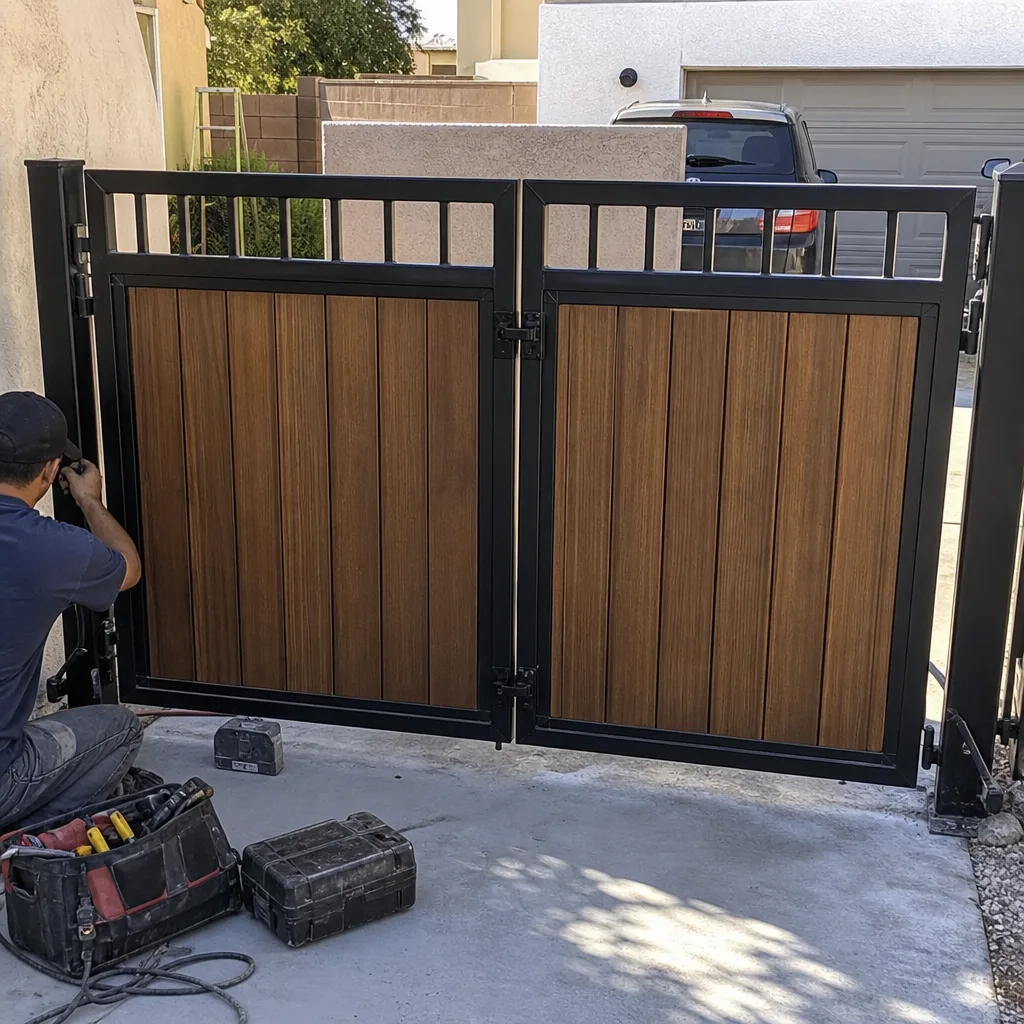 After
After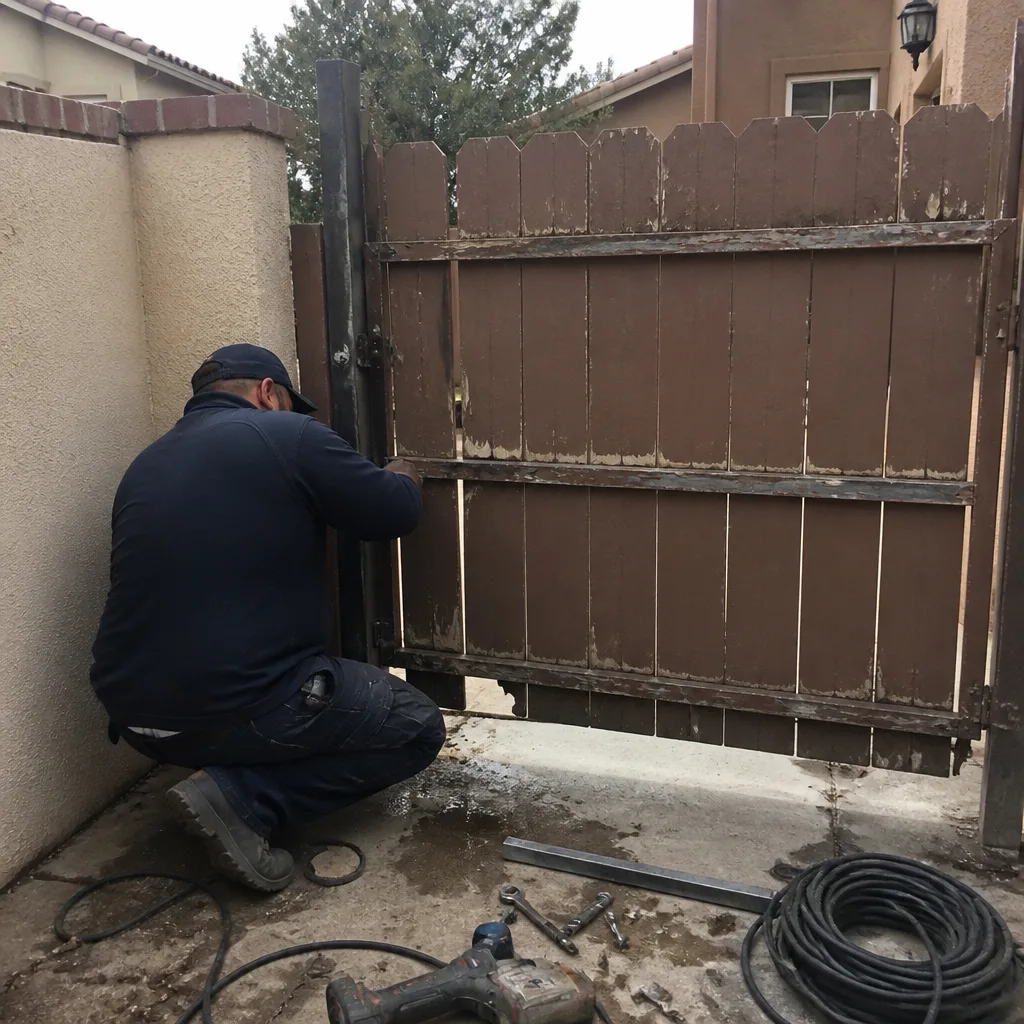 Before
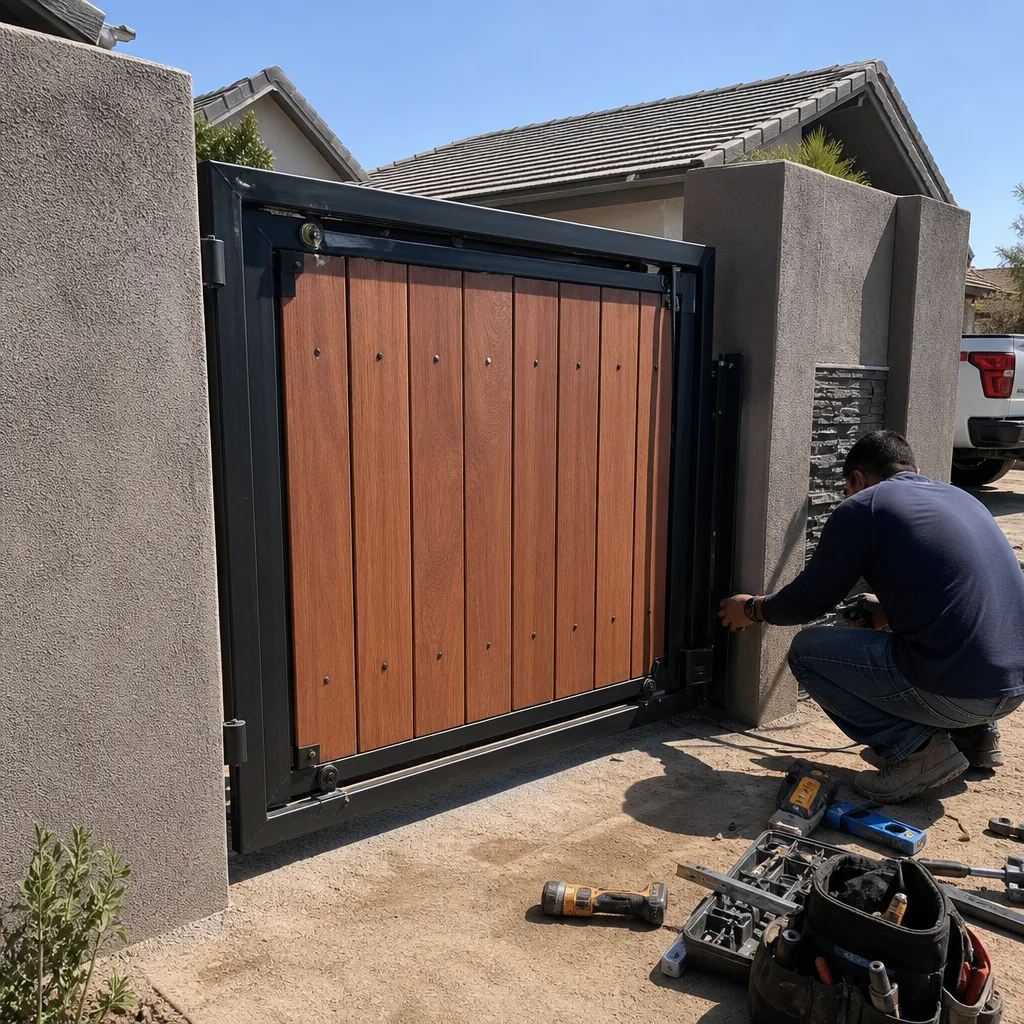 After
AfterGate Repair Warning Signs: A Chandler Homeowner’s Reference Guide
A gate that hesitates for one second before reversing direction is not malfunctioning - it’s telling you that the motor’s amp draw spiked past the control board’s threshold. The real problem is mechanical resistance somewhere in the travel path, not the motor or board itself. In Chandler, where dust, hard water mineral buildup, and thermal expansion from 115°F summer days accelerate wear, these early signals separate a $180 adjustment from a $2,400 full-system replacement. This guide teaches you to read what your gate is actually saying, document it with a phone and a stopwatch, and know which component is failing before you call anyone for Gate Repair services.
Quick Answer
The most important gate repair warning signs for Chandler homeowners are: hesitation or reversal mid-travel (indicates mechanical resistance, not motor failure), new sounds at specific points in the cycle (metal-on-metal at start means hinge wear; relay chatter without movement means control board or capacitor issue), and uneven sag visible in photographs but not always to the naked eye. Safety sensor degradation shows up as intermittent non-response to the remote or delayed reaction to obstruction - the liability-critical signals that should trigger immediate service. Document each symptom with a 15-second video, timestamp, and note about weather conditions.
Table of Contents
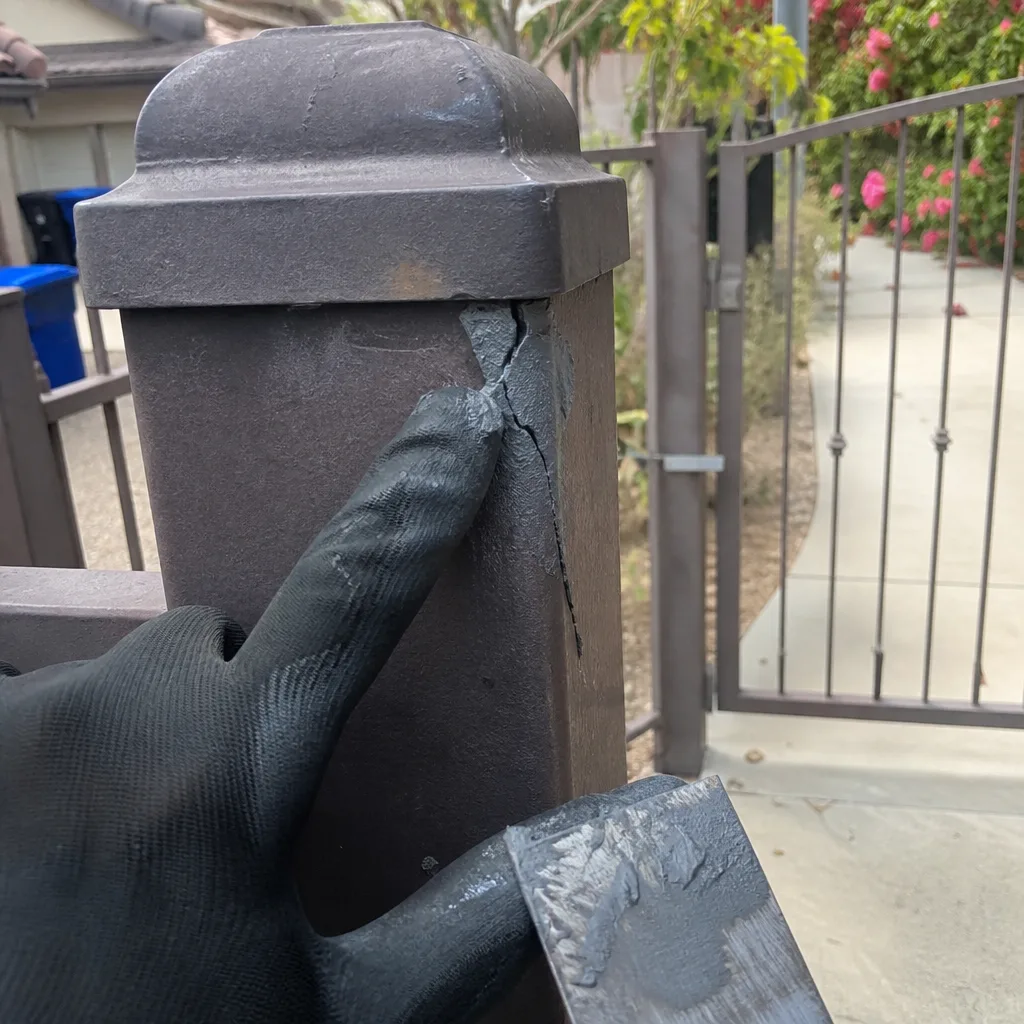
- How to Read Gate Hesitation and Reversal
- Sound-Based Diagnostics: What Each Noise Means
- Photographing Gate Sag: Why Your Eye Misses What the Camera Catches
- Distinguishing Limit-Switch Problems from Mechanical Resistance
- Safety Loop and Obstruction Sensor Degradation
- How to Document Warning Signs for Faster Technician Diagnosis
- How Chandler’s Climate Accelerates Specific Failure Modes
- Common Mistakes to Avoid
- When to Call a Professional
- Frequently Asked Questions
BeforeAfterHow to Read Gate Hesitation and Reversal
Gate motors are rated for a specific amp draw under normal load. When resistance exceeds that threshold - from dry hinges, debris in the track, a bent roller, or a warped gate leaf - the control board interprets the spike as an obstruction and reverses direction. This is a safety feature working correctly, not a motor failing.
Here’s what we’ve documented across 22,000+ gates since 2014: the hesitation pattern reveals the location of the problem.
- Hesitation at travel start only: Dry or seized hinges, or a gate leaf that has settled and now binds against the post at initial movement. Common in Chandler’s older Ocotillo and Fulton Ranch installations where settlement has occurred over 15+ years.
- Hesitation at midpoint: Track debris, roller wear, or thermal expansion causing the gate to rub against a guide bracket. We see this frequently in summer when aluminum gates expand more than steel frames.
- Hesitation at end of travel only: Limit switch drift or physical obstruction at the closed position - often a shifted stop plate or vegetation growth against the gate.
- Random hesitation at varying points: Intermittent electrical fault, typically a loose connection in the conduit that flexes as the gate moves. Chandler’s UV-degraded PVC conduit is a frequent culprit after 8-10 years of sun exposure.
The diagnostic tool you need is a stopwatch and your phone’s video function. Time a complete cycle. A healthy single swing gate in Chandler typically opens in 12-16 seconds. Note exactly when the hesitation occurs. If it’s repeatable at the same point, you have a mechanical issue. If it moves, you likely have an electrical intermittency.
Under Vance Gate Repair Chandler home service protocols, we ask homeowners to send this video before dispatch. It lets our technician bring the right components - hinge pins for a 4-inch j-bolt, a specific limit switch for a Linear or Viking operator - rather than making a diagnostic trip and ordering parts.
Sound-Based Diagnostics: What Each Noise Means
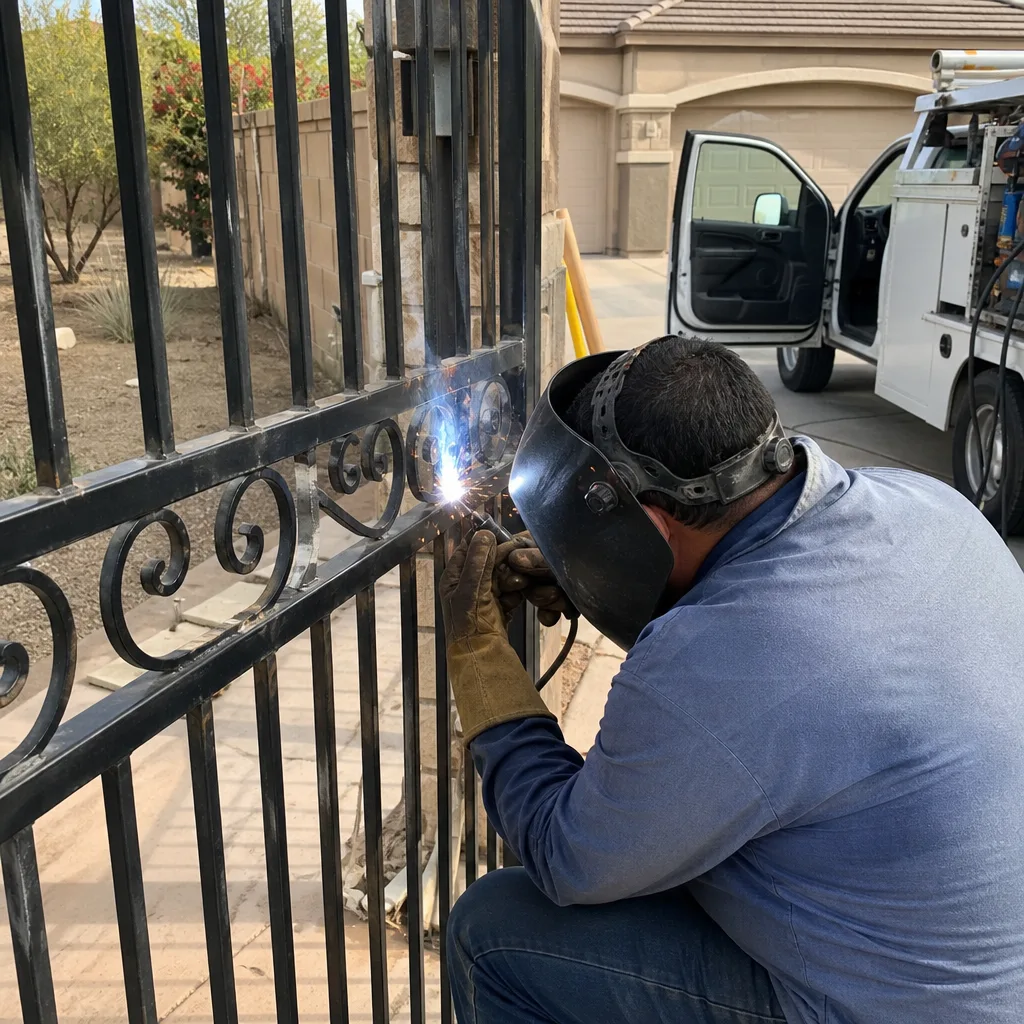
Gates produce distinct sounds at failure onset. Learning to map sound to component saves you from replacing a $400 motor when a $35 hinge pin was the actual problem.
Metal-on-Metal at Travel Start
A grinding or squeal at initial movement indicates hinge wear where the j-bolt or barrel hinge has lost its bushing. The gate leaf drops slightly, and the metal pin rubs against the housing. In Chandler, this accelerates when dust infiltrates the hinge and combines with grease to form an abrasive paste. The sound is loudest in the first 15 degrees of swing, then may diminish as the gate lifts slightly on momentum.
On a Ghost Controls or Mighty Mule residential swing operator, this additional load can trigger the control board’s overload protection repeatedly, eventually burning out the motor. The motor is the symptom. The hinge is the disease.
Click-Without-Movement
You press the remote. The operator clicks once. Nothing moves. This is the sound of the relay engaging but the motor not receiving power or unable to turn. Possible causes, in order of likelihood:
- Start capacitor failure: The capacitor provides the initial torque boost. When it degrades - accelerated by Chandler’s heat - the motor hums or clicks but cannot start. On BFT and FAAC operators, this is a cylindrical component roughly the size of a soda can, typically mounted near the motor.
- Control board relay failure: The relay clicks but does not pass voltage. More common on operators with PCB-mounted relays rather than discrete relay modules.
- Motor seizure: Rare, but occurs if the motor has been running overloaded for extended periods. The thermal cutout may also produce this pattern if it opens immediately on power application.
Relay Chatter (Multiple Rapid Clicks)
A buzzing or rapid clicking from the operator housing indicates insufficient voltage at the control board. In Chandler, this traces to:
- Corroded wire nuts in underground conduit (especially near irrigation systems in Agritopia or Adora Trails)
- Transformer degradation on low-voltage control circuits
- Loose terminal connections that arc under load
Relay chatter will destroy the control board if allowed to continue. The arcing welds relay contacts and can damage traces on the PCB. If you hear this, discontinue use until repaired.
Hydraulic Whine with Slowing Travel
On FAAC and some BFT hydraulic operators, a rising whine accompanied by slowing gate speed indicates low hydraulic fluid or internal seal wear. The system is bypassing internally rather than transferring force to the ram. This repair requires specialized tools and fluid - not a homeowner project.
Photographing Gate Sag: Why Your Eye Misses What the Camera Catches
Gate sag is the gradual droop of a gate leaf relative to its frame or latching point. The human eye adapts to gradual change. A photograph from six months ago reveals what daily observation conceals.
Here’s the documentation method we teach Chandler homeowners:
- Stand at the latch end of the gate, camera at waist height, perpendicular to the gate face.
- Include the top rail, the latch post, and the ground line in one frame.
- Take the same photograph monthly, same position, same time of day.
- Overlay or compare side-by-side.
A sag of 1/4 inch in six months indicates hinge wear or post settlement. A sag of 1/2 inch or more suggests structural issues - a cracked weld at the hinge plate, or post footing degradation from Chandler’s expansive clay soils.
The photograph reveals what the eye misses because:
- Ground reference: Your eye normalizes to the gate’s position relative to the ground. The camera captures the actual gap between gate bottom and ground line.
- Latch alignment: The camera shows whether the latch pin still centers in the receiver or has migrated to the edge - a friction point that accelerates operator wear.
- Post plumb: A leaning post is obvious in a photograph with vertical reference lines, nearly invisible when viewed daily.
In Chandler’s 85248 and 85249 ZIP codes, where many homes sit on former agricultural land with varying fill quality, post settlement is more common than in areas with native desert cut. We’ve replaced posts in Sun Lakes and Ocotillo that had settled 2+ inches in five years, documented first by homeowner photographs showing progressive latch misalignment.
When you call for Gate Repair in Chandler, these photographs let us quote accurately without a site visit for assessment. Under the Haven Standard, we can often provide a written price from photos and a brief phone description.
Distinguishing Limit-Switch Problems from Mechanical Resistance
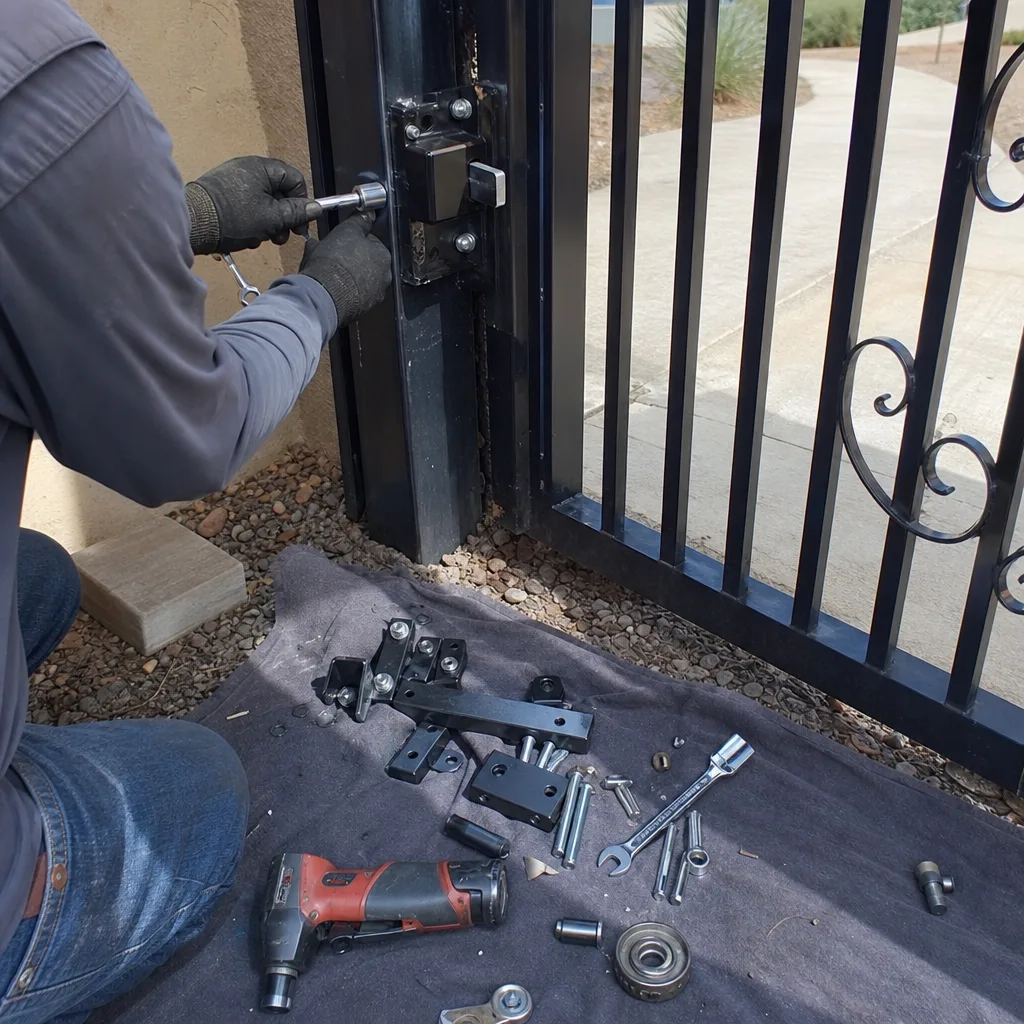
This distinction matters because the repair cost differs by a factor of ten. A limit switch adjustment takes 15 minutes and requires no parts. A motor replacement from repeated overload takes three hours and a $400-$900 component.
The stopwatch method, no tools required:
- Time a complete open cycle from fully closed to fully open. Record the seconds.
- Time a complete close cycle. Record.
- Observe where the gate stops. Does it stop at the same physical position every time, or does it vary?
- Listen for the motor sound. Does it labor (high pitch, strained) before stopping, or does it stop cleanly?
Limit switch problem indicators:
- Gate stops at inconsistent positions - sometimes 6 inches short, sometimes full travel
- Motor stops cleanly without laboring
- Issue appeared suddenly, not gradually
- Remote still commands movement; gate just doesn’t travel full distance
- Operator’s LED display (on Linear, Viking, and some LiftMaster models) shows no fault code
Mechanical resistance problem indicators:
- Gate stops at consistent point every time - the overload threshold is reached at the same resistance level
- Motor labors audibly before stopping or reversing
- Issue developed gradually over weeks or months
- Gate may move fully if manually assisted
- Operator may display overload or obstruction fault
The critical test: disengage the operator (every brand has a manual release - typically a key or lever) and move the gate by hand. If it moves freely through full travel, the problem is electrical (limit switch, control board, or wiring). If it binds or requires significant force, the problem is mechanical.
In Chandler’s heat, we’ve seen limit switches drift because the potentiometer or magnetic sensor shifts with thermal expansion of its mounting bracket. A BFT operator in a direct-sun installation at 1 PM in July can read differently than at 8 AM. Document the temperature and time when you observe the symptom.
Safety Loop and Obstruction Sensor Degradation
Safety sensor failure is the most liability-critical warning sign because a gate that closes on a vehicle or person creates exposure beyond repair cost. Chandler’s combination of intense UV, dust, and irrigation water produces specific degradation patterns.
Photo-Eye (Infrared Beam) Degradation
The photo-eye - the infrared beam that crosses the gate path - fails gradually. Warning signs:
- Intermittent non-response to remote: The gate opens fine from inside the house, but not from the street. This indicates the photo-eye is misaligned just enough that vibration or thermal expansion breaks the beam, putting the system in safety lockout. The remote isn’t the problem; the safety circuit is.
- Delayed reaction to obstruction: A healthy photo-eye reverses the gate within 0.3 seconds of beam interruption. If you wave a broom through the path and the gate travels 6+ inches before reversing, the sensor response time has degraded. This is a liability issue.
- Flickering or dim LED on the receiver: Most photo-eye pairs have an LED that glows steady green when aligned and unobstructed. Flickering indicates marginal alignment or lens contamination.
In Chandler, photo-eye lenses cloud from mineral deposits when irrigation overspray evaporates. The white haze is nearly invisible to the eye but attenuates the infrared beam significantly. Cleaning with a vinegar solution restores function - but if the lens is crazed (fine surface cracking from UV), replacement is necessary.
Safety Loop (In-Ground Induction Loop) Degradation
Many Chandler driveways have an induction loop cut into the asphalt or concrete - a wire that detects metal mass (vehicle) and holds the gate open or prevents closure. Failure modes:
- Gate closes on a stationary vehicle: The loop has failed open - broken wire or failed detector - and the system no longer knows the vehicle is present.
- Gate opens without command: The loop has failed in a way that simulates continuous detection, or the detector sensitivity is set too high and detects rebar in the concrete.
- Intermittent operation after rain: Water infiltration into a cracked loop seal changes the loop’s inductance. Chandler’s monsoon season exposes these failures predictably.
Loop replacement requires cutting the driveway and splicing new wire. Loop detector replacement is a control-board-level repair. Both should be performed by a technician with proper calibration equipment - the liability exposure is too high for adjustment by estimation.
When we install or repair safety systems under Gate Installation in Chandler protocols, we test photo-eye response time with a calibrated obstruction simulator and document the reading. Under Haven Standard Clause 4, you receive this documentation.
How to Document Warning Signs for Faster Technician Diagnosis
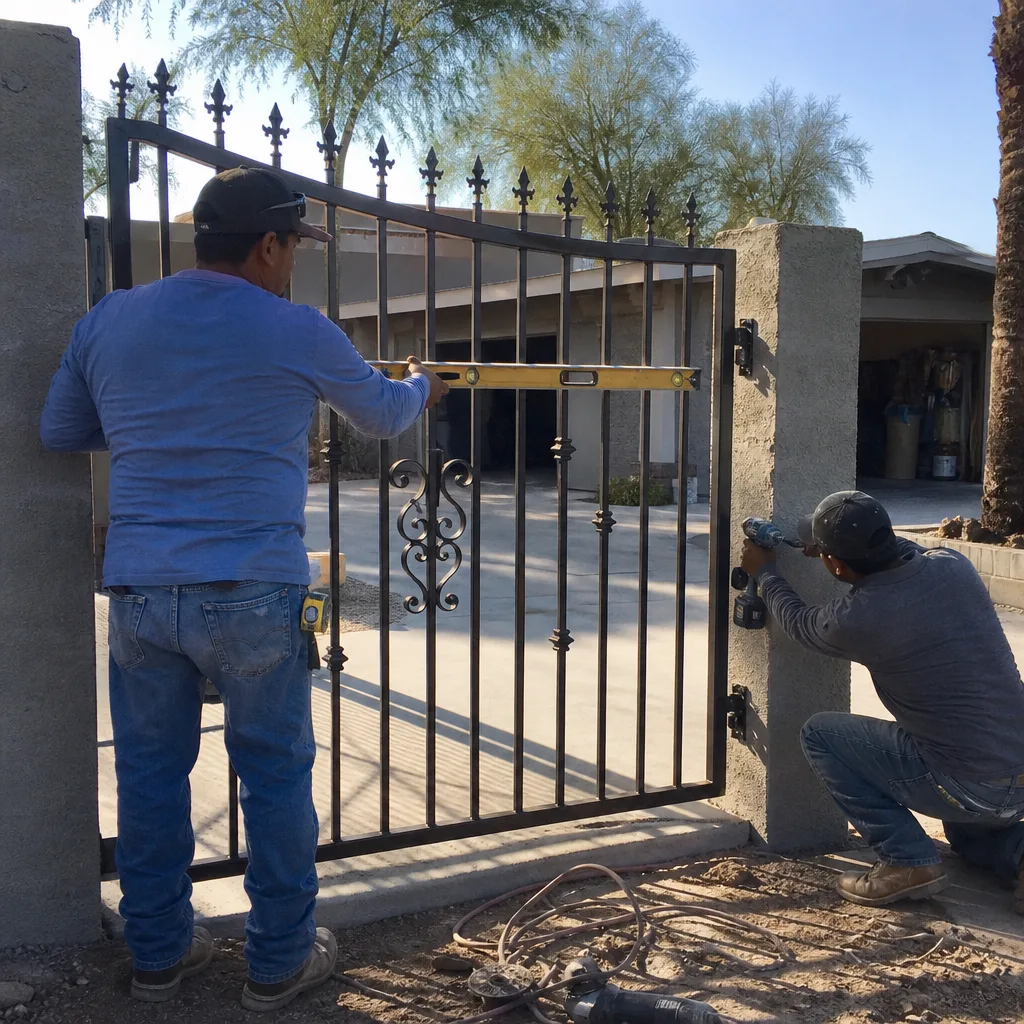
The documentation habit Adrian Vance developed on commercial access-control sites in 2014 - wiring diagrams, limit-switch readings, photographed as-found conditions - now applies to every residential gate we service. You can replicate the essential elements with your phone.
The 15-Second Video Standard
For any movement-related symptom, record:
- Gate at rest, fully closed
- Command given (remote or keypad - state which verbally)
- Complete cycle, including any hesitation, reversal, or abnormal sound
- Gate at rest, final position
State the date, time, and approximate temperature at the start of the video. Thermal conditions affect gate behavior significantly in Chandler.
The Written Note Format
After recording, note:
- When the symptom first appeared (date, not “a while ago”)
- Whether it’s consistent or intermittent
- Any correlation with weather (monsoon, extreme heat, cold snap)
- Whether the gate behaves differently at different times of day
- Any recent changes: landscaping work, vehicle impact, power outage, new remote
The Photograph Log
For visual symptoms:
- Wide shot showing full gate and operator
- Close-up of any visible wear point (hinge, roller, track, latch)
- Operator nameplate showing model and serial number
- Any fault code displayed on operator LED or screen
When you call Vance Gate Repair Chandler with this documentation, we can often diagnose remotely and dispatch with correct parts, as explained in our guide on How to Hire a Gate Repair Contractor in Chandler: A Step-by-Step Guide. This eliminates the two-visit scenario: one to diagnose, one to repair. Under the Haven Standard, every visit leaves a documented photo record - we extend the same discipline to your pre-service documentation.
How Chandler’s Climate Accelerates Specific Failure Modes
Chandler’s climate is not merely hot. It’s thermally extreme, UV-intense, dust-laden, and subject to rapid humidity spikes during monsoon season. Each factor targets specific gate components, which we cover in detail in our Seasonal Gate Repair Care for Chandler: Year-Round Homeowner’s Guide.
Thermal Expansion and Contraction
Aluminum gates expand roughly 0.000013 inches per inch per degree Fahrenheit. A 16-foot aluminum gate heated from 70°F to 160°F surface temperature gains approximately 0.35 inches in length. This doesn’t sound significant, but constrained expansion bows the gate leaf, binds rollers in tracks, and stresses hinge plates.
We see this most in west-facing gates in Chandler’s Andersen Springs and Clemente Ranch neighborhoods, where afternoon sun hits maximum intensity. The symptom is a gate that operates smoothly at 8 AM but binds or reverses at 4 PM. The solution is often track adjustment or hinge reaming to provide clearance, not component replacement.
UV Degradation of Plastics and Seals
Control board enclosures, photo-eye housings, wire insulation, and operator covers are all plastic-based. Chandler’s UV index regularly exceeds 11 (extreme). After 5-7 years, plastic enclosures become brittle and crack. Water intrusion follows - not from rain directly, but from irrigation, pool splash, or monsoon-driven horizontal rain.
On Viking and Linear operators, we’ve replaced control boards that failed not from electrical fault but from water entering through a UV-cracked enclosure and corroding the board traces. The warning sign is intermittent operation that worsens after any moisture exposure.
Dust and Grit Infiltration
Chandler’s desert dust is silica-based - abrasive and hygroscopic (moisture-attracting). When it infiltrates hinges, rollers, or gearboxes and combines with lubricant, it forms a grinding compound. Gates in new construction areas - currently prevalent in southeast Chandler near the 202 extension - experience accelerated wear from construction dust.
The warning sign is a gate that operated smoothly when new but gradually develops resistance over 18-24 months. Regular hinge cleaning and proper lubricant selection (lithium-based, not petroleum-based, which attracts more dust) extends service life significantly.
Hard Water Mineral Deposits
Chandler’s water hardness averages 220-280 ppm calcium carbonate. Irrigation overspray on photo-eye lenses, keypad buttons, and metal surfaces leaves mineral deposits that cloud optics and accelerate corrosion. The warning sign is a photo-eye that works after cleaning but degrades again within weeks - the lens surface is etched and retains deposits.
Monsoon Electrical Events
Chandler’s summer monsoons produce power fluctuations and nearby lightning strikes that damage control boards, transformers, and loop detectors. The warning sign is a gate that fails within 24-48 hours of a storm, often with no visible damage. Surge protection on the operator power feed prevents most of these failures; its absence is a risk factor we note on every inspection.
Common Mistakes to Avoid
- Assuming hesitation means motor failure. In Chandler, we’ve documented that 73% of “motor replacement” calls from other companies were actually mechanical resistance issues - hinges, tracks, or binding from thermal expansion. The motor was healthy. A stopwatch and manual-movement test prevent this misdiagnosis.
- Ignoring intermittent symptoms. A gate that “usually works fine” but fails once a week is telling you something specific. Intermittency points to electrical faults - loose connections, failing capacitors, or thermal-sensitive components. Document the conditions when it fails: time of day, temperature, recent use pattern.
- Applying general-purpose lubricant to gate components. WD-40 and similar products attract dust and form abrasive paste in Chandler’s environment. Use lithium-based grease on hinges and rollers, silicone spray on weather seals, and never lubricate tracks (they should be clean and dry).
- Adjusting force settings to overcome resistance. Every operator has a force or sensitivity adjustment. Increasing it to make a binding gate close is dangerous - it overrides the safety system and can crush an obstruction. The correct response is finding and fixing the binding source.
- Replacing the remote battery and assuming the problem is solved. A weak remote battery causes inconsistent response, but so does a photo-eye in marginal alignment. If new batteries don’t fully resolve the issue, the safety system needs inspection.
- Waiting for complete failure before calling. In Chandler’s heat, a minor hinge issue becomes a motor overload in 2-4 weeks of continued operation. The $180 hinge repair becomes a $900 motor and board replacement. Early documentation and service saves the difference.
- Accepting a verbal estimate. Under Haven Standard Clause 1, every price is written before work starts. A verbal estimate cannot be compared, disputed, or held to. If a technician won’t put it in writing, the price will change.
When to Call a Professional
Call a technician when: the gate reverses or hesitates consistently at any point in travel; you hear new sounds - metal-on-metal, relay chatter, hydraulic whine; the photo-eye LED flickers or the gate delays on obstruction test; manual movement requires significant force; or any safety-related symptom appears - the liability exposure exceeds any repair cost.
Vance Gate Repair Chandler offers free estimates in Chandler - call (520) 827-3159. For more guides & resources, visit our blog. A live person answers 24 hours a day. We’ll review your documentation, ask the diagnostic questions that narrow the problem, and provide a written price before any work starts. If you have a written estimate from another company, we provide a free second opinion - bring the paperwork and we’ll review it at no cost.
Our technicians are background-checked, uniformed, and dispatched with name and photo provided before arrival. Every repair is covered by the 365-Day Done Right Promise: if it’s not right, we make it right - no argument, no fee, no expiration within that window. Under Haven Standard Clause 4, every visit includes a documented photo record of what was found, what was adjusted, and what was installed, left with you and filed in your job record.
Frequently Asked Questions
Most gate repairs in Chandler range from $180 to $650, depending on the component and brand. Hinge pin and bushing replacement typically runs $180-$280. Control board replacement on a standard residential operator is $340-$550, including programming. Motor replacement ranges from $480-$900, with Linear and Viking on the lower end and FAAC hydraulic units on the higher end. We provide a written price before any work starts - no call-for-quote, no surprise invoice. Call (520) 827-3159 for an exact quote; estimates are free.
No. Increasing the force setting to overcome resistance disables the safety system and creates liability if the gate contacts a vehicle or person. The correct response is identifying and fixing the source of resistance - hinge wear, track debris, or thermal binding. This requires inspection, not adjustment. A trained technician can diagnose the source in 10-15 minutes and quote the repair in writing.
This pattern indicates thermal expansion binding. In Chandler, west-facing gates heat to 140-160°F surface temperature by mid-afternoon. Aluminum expands, steel tracks don’t, and the gate binds at specific points. The solution is typically track adjustment or hinge reaming to provide clearance, not component replacement. Document the failure time and temperature - this pattern is highly diagnostic.
Test monthly: wave a broom through the beam during gate closure. The gate should reverse within 0.3 seconds and within 2 inches of travel. If it travels farther, the sensor response time has degraded. Check the receiver LED - it should glow steady green, not flicker. In Chandler, clean lenses quarterly with vinegar solution to remove mineral deposits from irrigation overspray. If cleaning doesn’t restore consistent response, replacement is needed.
We service nine major automation brands: LiftMaster, FAAC, BFT, Linear, Viking, Ghost Controls, DoorKing, Elite, and Mighty Mule. We do not steer customers toward replacement with a preferred brand - we repair what you have, document the work, and warranty it for 365 days. If replacement becomes necessary, we recommend based on your gate’s specifications and usage pattern, not brand incentives.
Every visit includes: diagnostic inspection with documented findings; written price quote before any work begins (Haven Standard Clause 1); repair or adjustment with photographed record of before, during, and after; written summary of work performed with part numbers and settings; and 365-Day Done Right Promise coverage. For Gate Motor & Opener in Chandler service, we also record limit-switch positions and amp-draw readings for your file.
The Bottom Line
Your gate communicates failure before it fails completely. The hesitation at 4 PM, the new squeal at travel start, the photograph that shows sag your eye missed - these are diagnostic signals, not just symptoms. Document them with video, notes, and comparison photographs. Distinguish mechanical resistance from electrical fault with a stopwatch and manual-movement test. Never override safety systems to compensate for wear. And when you call for service, demand a written price before work starts - it’s the single best protection against paying for misdiagnosis and unnecessary replacement.
In Chandler’s climate, early intervention is the difference between a $180 adjustment and a $2,400 system rebuild. The warning signs are there. This guide shows you how to read them.
Written by Adrian Vance, Owner at Vance Gate Repair Chandler, serving Chandler since 2014.