
Last updated September 22, 2026
Free on-site gate assessment - hinges, posts, and your LiftMaster or Nice gate operator checked before anything is quoted
The assessment is free and the quote is the invoice.
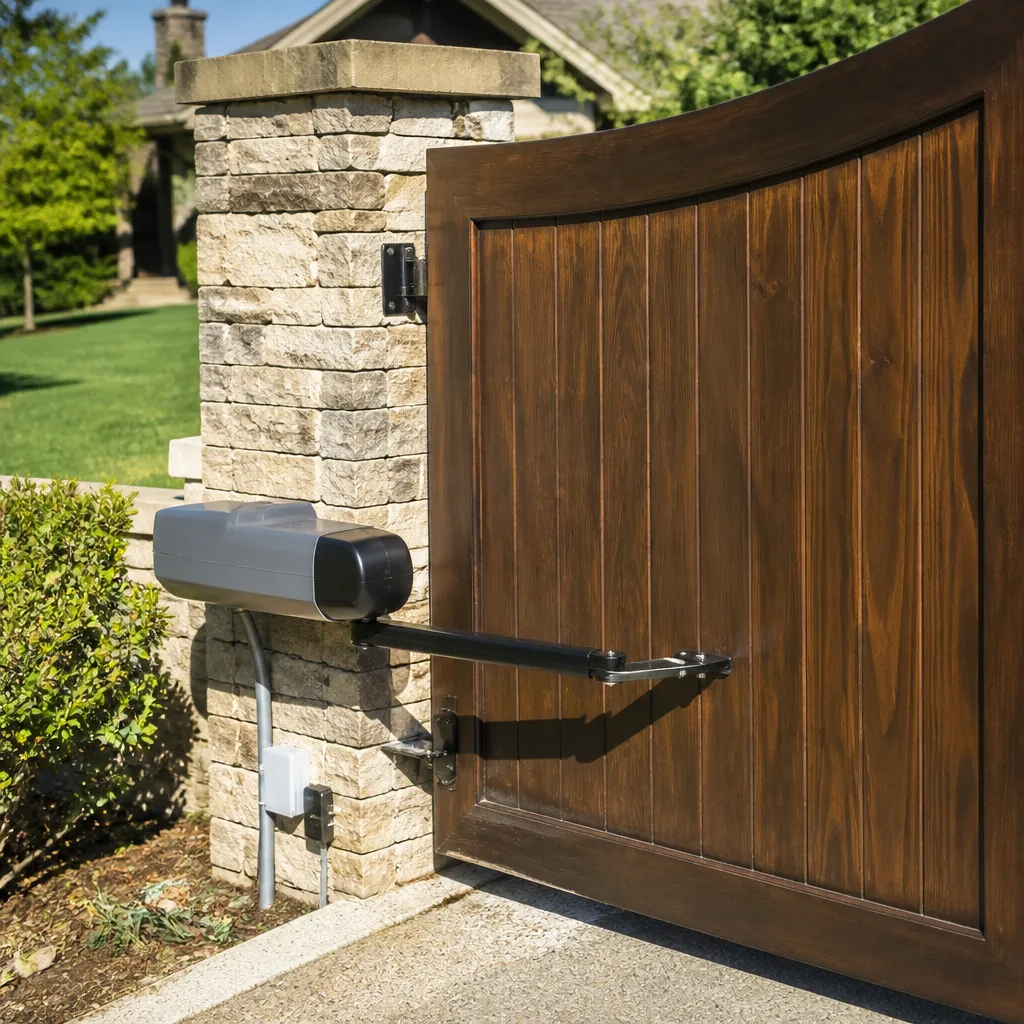
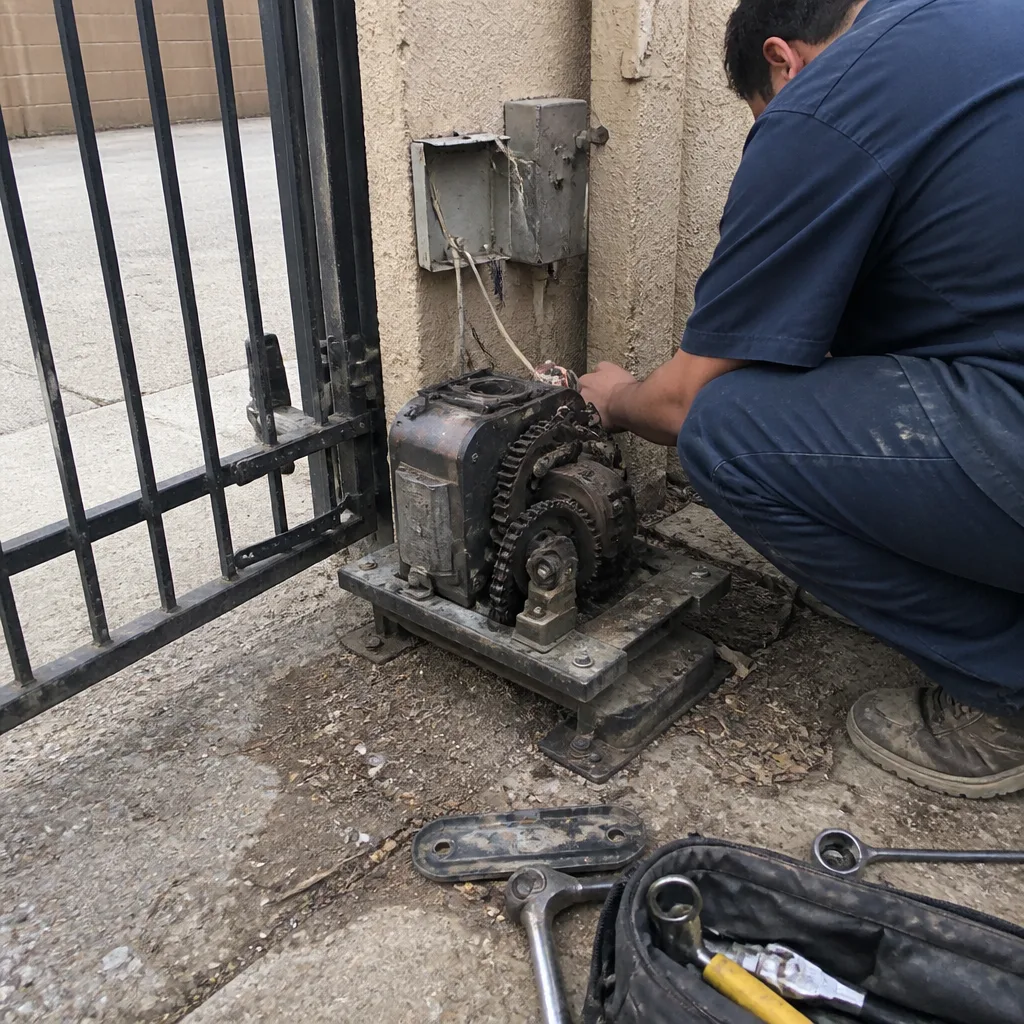 Before
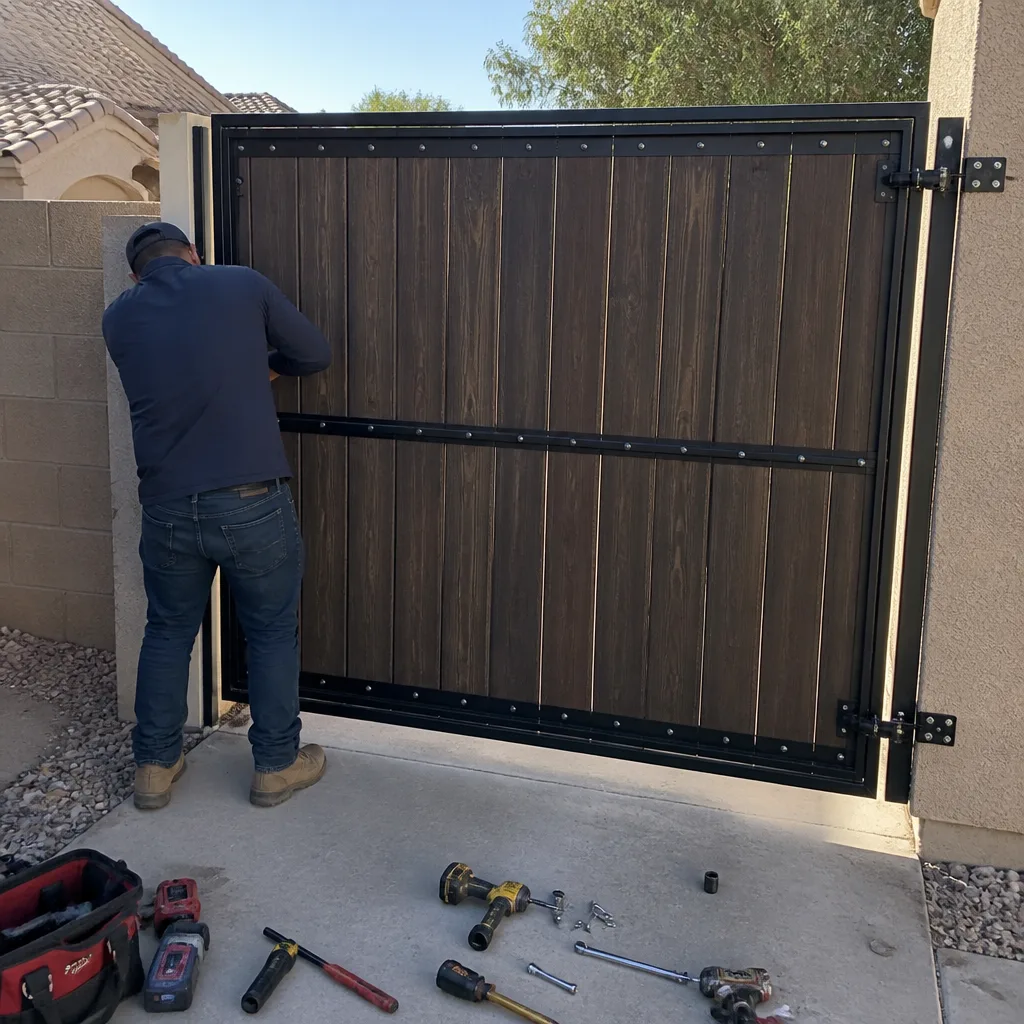 After
After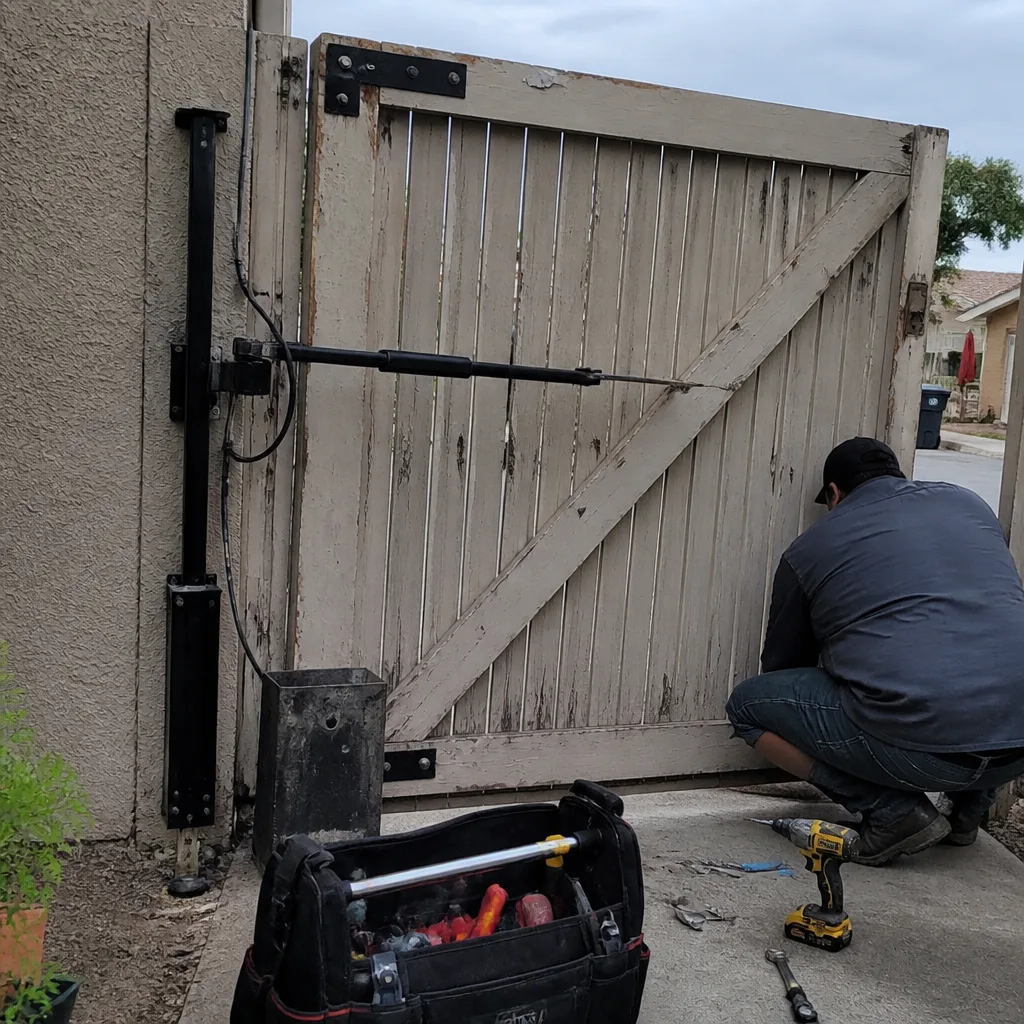 Before
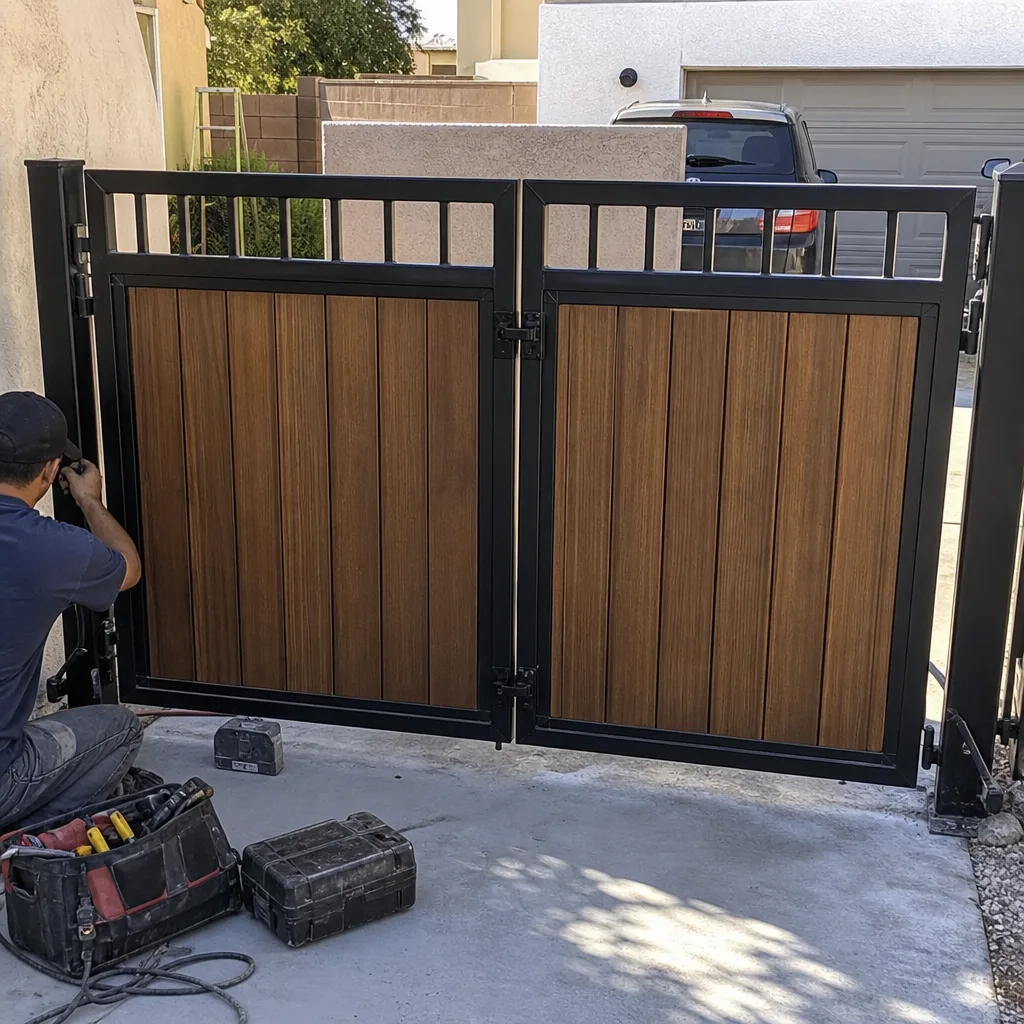 After
After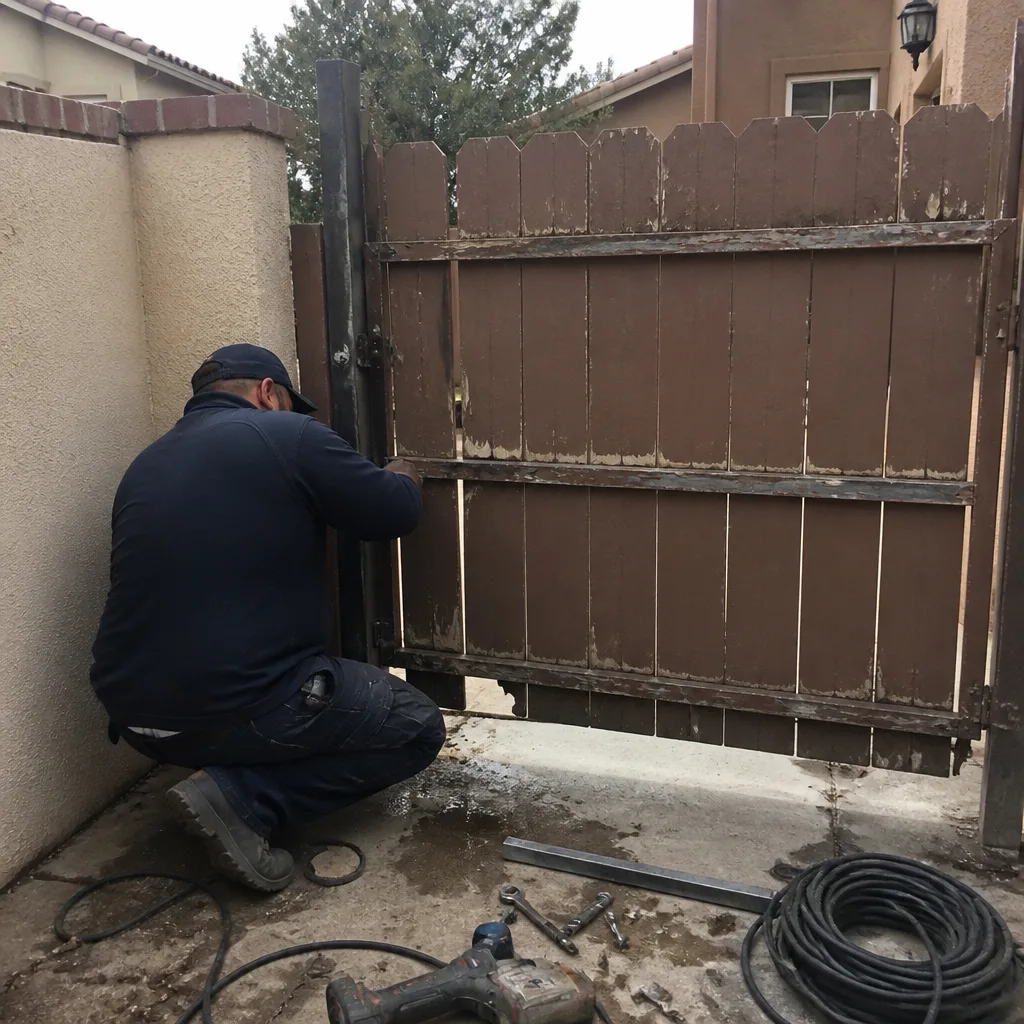 Before
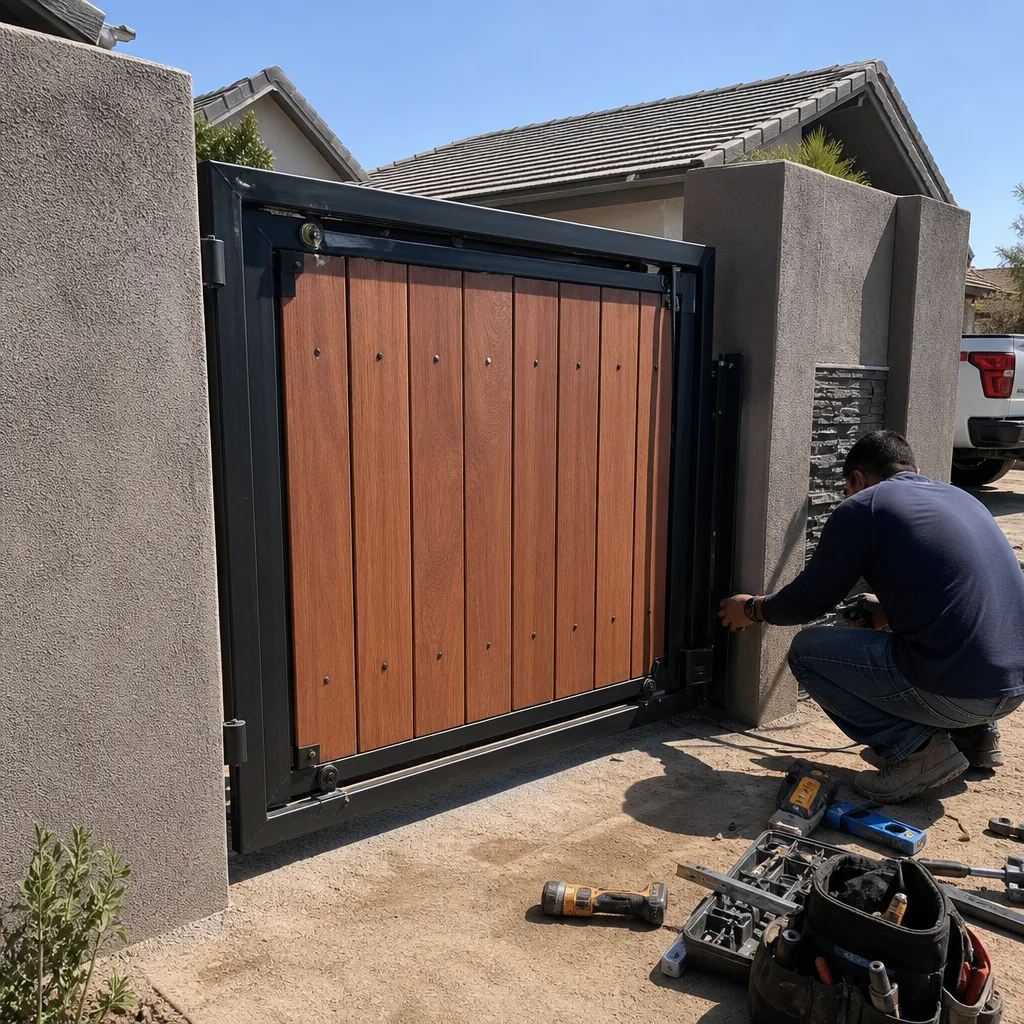 After
AfterGate Repair Permits, Codes & Inspections in AZ: What You Need to Know
Installing a new gate operator on an existing post requires no permit in most Chandler residential applications. But extend the gate opening width by even 12 inches to fit a new vehicle, and you can trigger a full zoning review, setback verification, and HOA architectural review - a distinction that catches homeowners off guard after they’ve already purchased equipment. In Chandler, we’ve seen this exact scenario stall projects for six weeks while the homeowner sorts out what their contractor should have flagged on day one. This guide draws a clear line between gate work that requires a permit and work that doesn’t, so you aren’t talked into unnecessary fees or surprised by stop-work orders.
Quick Answer
Most gate repair and like-for-like replacement in Chandler does not require a city permit. New gate installations, modifications to opening width or height, and any work affecting a public sidewalk or utility easement typically do. Automated operators must meet UL 325 safety standards regardless of permitting status, and HOA architectural guidelines can override city code when they’re stricter.
Table of Contents
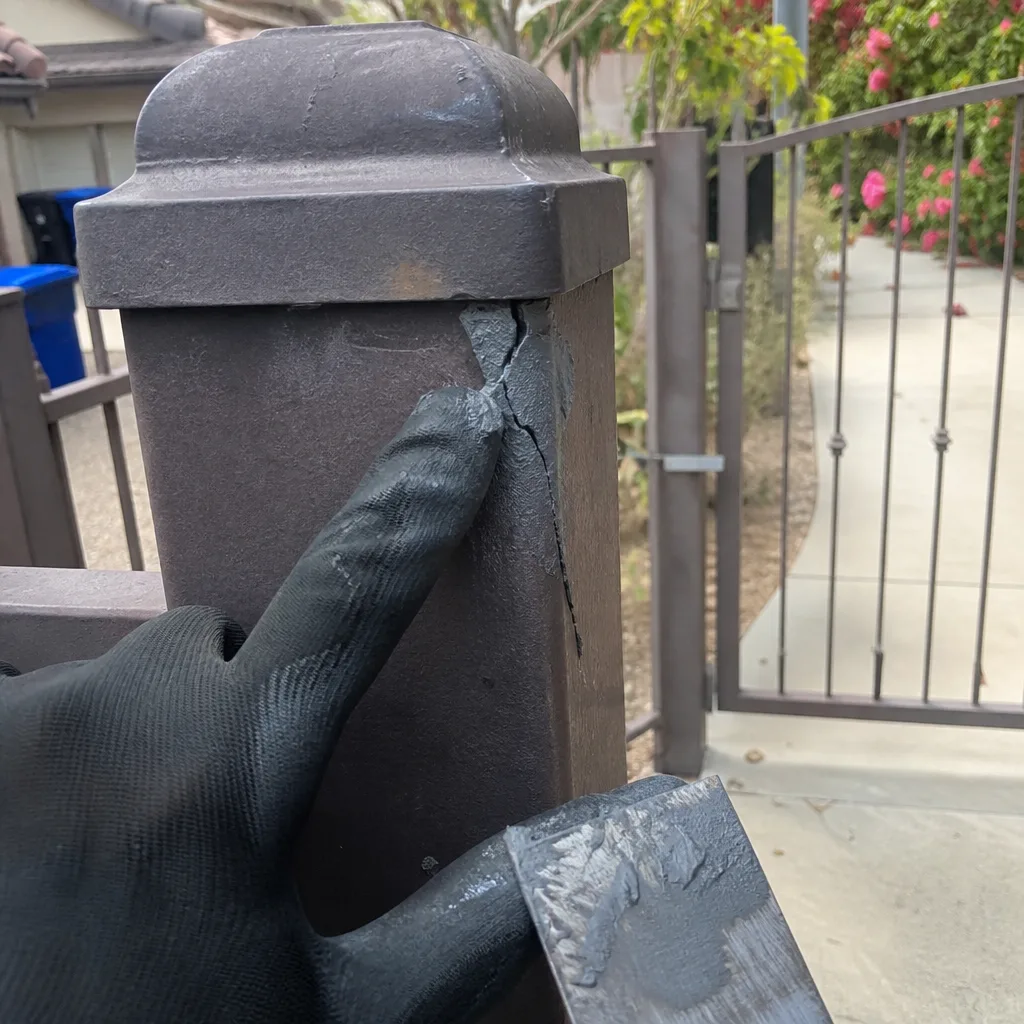
- When Is a Permit Required for Gate Work in Chandler?
- Like-for-Like Repair vs. Modification: The Critical Distinction
- UL 325 Safety Standard: What It Requires and How to Verify Compliance
- HOA Guidelines vs. City Code: Which Governs When They Conflict?
- Unpermitted Work and Homeowner Liability: Insurance and Legal Exposure
- How to Request a Chandler Inspection and What Inspectors Actually Check
- What Documentation You Should Receive From Your Contractor
- Common Mistakes to Avoid
- When to Call a Professional
- Frequently Asked Questions
BeforeAfterWhen Is a Permit Required for Gate Work in Chandler?
Chandler Development Services classifies gate work into two buckets: maintenance/repair and new construction or modification. The permit threshold sits at whether you’re restoring existing function or creating something new.
No permit required: Replacing a failed gate motor with a comparable unit on existing posts and wiring. Replacing a broken hinge, roller, or wheel with the same specification. Repairing or replacing an existing intercom or keypad on its current mount. Welding cracks in an existing frame. Adjusting limit switches, photo-eyes, or safety edges on an installed operator. These are all classified as like-for-like repair.
Permit required: Installing a new gate where none existed. Increasing the gate opening width or height - even by a small dimension. Moving posts or footings. Adding automation to a previously manual gate if new electrical service is required. Any work encroaching on a public sidewalk, alley, or utility easement. Installing a gate that changes the fire department access route or emergency vehicle turnaround.
Chandler’s specific trigger is the “alteration” standard under the International Residential Code as locally amended. If the work changes the footprint, height, or operational characteristics of the gate system, it’s an alteration. If it merely restores the system to its previously approved state, it’s repair.
We’ve encountered this directly in Chandler’s Cooper Commons neighborhood, where a homeowner replaced a 14-foot swing gate with a 16-foot version to accommodate a new RV - a scenario we cover in our Gate Repair Warning Signs: A Chandler Homeowner’s Reference Guide. The contractor installed it as “repair” without pulling a permit. A neighbor’s complaint triggered a code enforcement visit, and the homeowner faced a stop-work order with the new gate already hung. The 16-foot version required setback verification because the wider arc encroached closer to the property line at full swing. Six weeks and $340 in permit and reinspection fees later, the gate was approved - but only after the homeowner produced a survey showing the wider gate still cleared the required five-foot side setback.
The permit application itself goes through Chandler Development Services, typically requiring a site plan, gate details, and for automated gates, electrical load calculations. Residential permits for gate work generally run $85-$180 depending on valuation and whether electrical inspection is included. Plan review takes 5-10 business days; same-day over-the-counter review is not available for gate alterations.
Like-for-Like Repair vs. Modification: The Critical Distinction
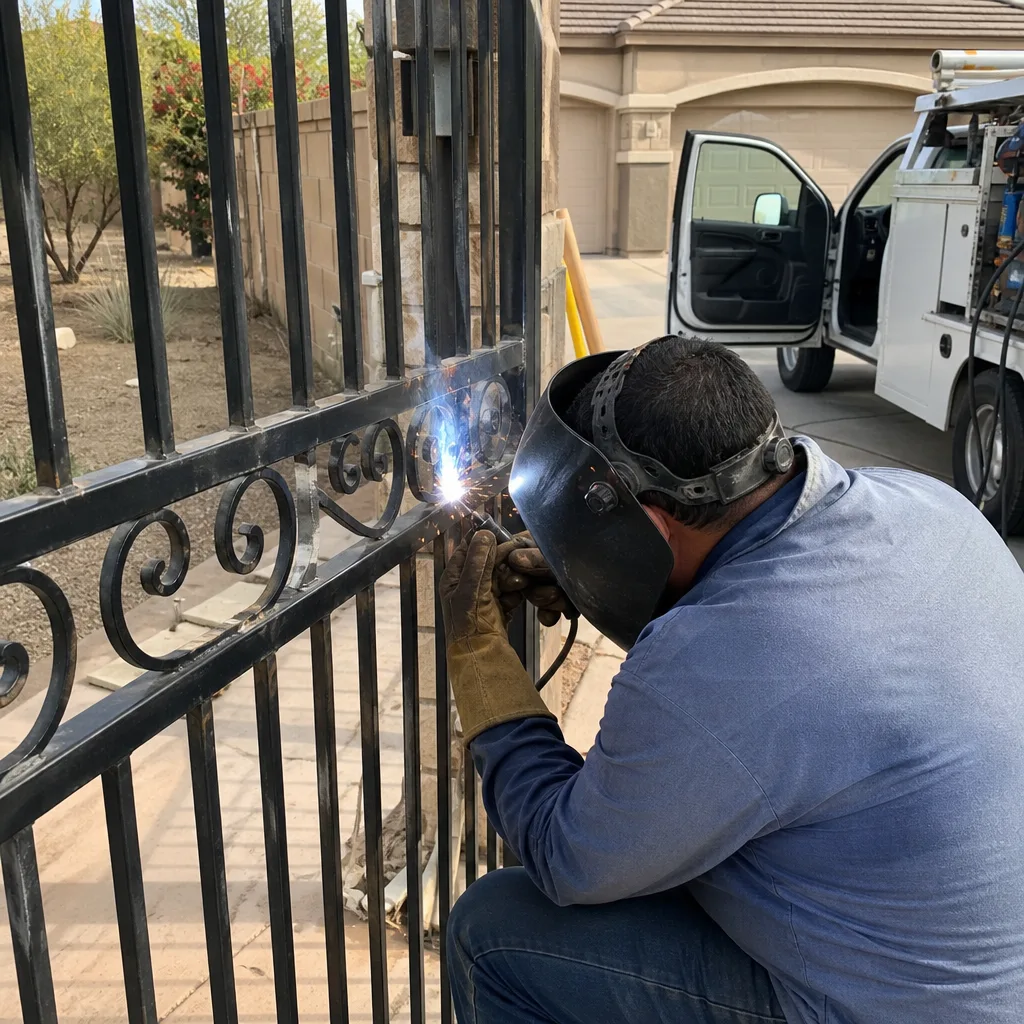
The concept sounds simple until you’re standing in your driveway with a technician who’s already removed your old operator and is unboxing a replacement. At that moment, “like-for-like” becomes a series of specific questions with permit consequences.
Four questions that determine your permit status:
- Are the posts staying exactly where they are? If post footings are disturbed, moved, or enlarged, you’ve crossed into modification territory.
- Is the new operator comparable in weight, draw, and mounting? Upgrading from a residential-grade Mighty Mule to a commercial-grade FAAC with significantly greater torque may require structural verification of the post and arm bracket.
- Is new electrical service being run? Plug-in low-voltage operators typically don’t trigger electrical permits. Hardwired 110V or 220V service with new conduit, trenching, or panel work does.
- Does the gate’s travel path change? Converting a swing gate to a slide gate, or vice versa, is always a modification. Changing the direction of swing can be too, if it affects sidewalk clearance or sight lines.
In Chandler’s Ocotillo neighborhood, we repaired an Elite operator that had failed after eight years. The homeowner asked if we could “upgrade while we’re at it” to a LiftMaster with smartphone connectivity. The new unit weighed 14 pounds more and required a different arm bracket geometry. We photographed the existing post, measured deflection under load, and determined the heavier operator exceeded the post’s original engineering. Rather than install and hope, we wrote a scope that included post reinforcement with a steel sleeve - and flagged that this crossed into modification territory requiring permit verification. The homeowner chose to stay with a comparable replacement instead, preserving the like-for-like status and avoiding a three-week permit delay.
The Haven Standard applies here: we document what we found, what we measured, and why we recommended a particular path. Under Clause 4, the photo record includes the post measurement, the load specification of the proposed replacement, and the written note explaining the permit implication. The homeowner gets this documentation whether or not they hire us for the work.
UL 325 Safety Standard: What It Requires and How to Verify Compliance
UL 325 is the Underwriters Laboratories standard for door, drapery, gate, louver, and window operators and systems. For automated gates, it’s the difference between a legal installation and one that exposes you to liability if someone is injured. The standard applies regardless of whether your specific Chandler project required a building permit.
What UL 325 requires for automated gates:
- Two independent entrapment protection devices on every automatic gate. Typically this means photo-eyes (infrared beams) and safety edges (contact sensors on the leading edge), or two sets of photo-eyes at different heights.
- Hardwired safety devices, not wireless, for all new installations after 2016. Older wireless safety edges are grandfathered only if they were compliant at time of installation and remain functional.
- A manual release mechanism accessible from outside the gate for emergency egress.
- Warning signs on both sides of the gate indicating automatic operation.
- Gate force limitation: the operator must stop and reverse when encountering specified resistance levels, tested with a calibrated force gauge.
- Control station placement that prevents operation while a person is in the gate’s path - typically three feet minimum from the nearest moving part.
How do you verify your contractor’s installation is UL 325 compliant? Ask for the UL listing mark on the operator itself - a holographic label with the UL symbol and file number. Ask for documentation showing the safety devices are listed as compatible with that specific operator model. Ask for the force test results; under Clause 4 of our Haven Standard, we photograph the force gauge reading during commissioning and include it in the job record.
We’ve serviced gates in Chandler’s Fulton Ranch where the original installer used a non-UL-listed operator purchased online, wired it without safety edges, and called it complete. When the gate struck a delivery driver two years later, the homeowner’s insurance carrier denied coverage based on the known non-compliant installation. The homeowner had no recourse against the original installer, who had dissolved his LLC six months prior.
The brands we service - LiftMaster, FAAC, BFT, Linear, Viking, Ghost Controls, DoorKing, Elite, and Mighty Mule - all maintain current UL 325 listings for their operators. We verify this before specifying any replacement. If a homeowner requests a brand we don’t service, we decline rather than install outside our competency; under the 365-Day Done Right Promise, we’d be liable for that installation for a full year, and we don’t take on work we can’t stand behind.
HOA Guidelines vs. City Code: Which Governs When They Conflict?
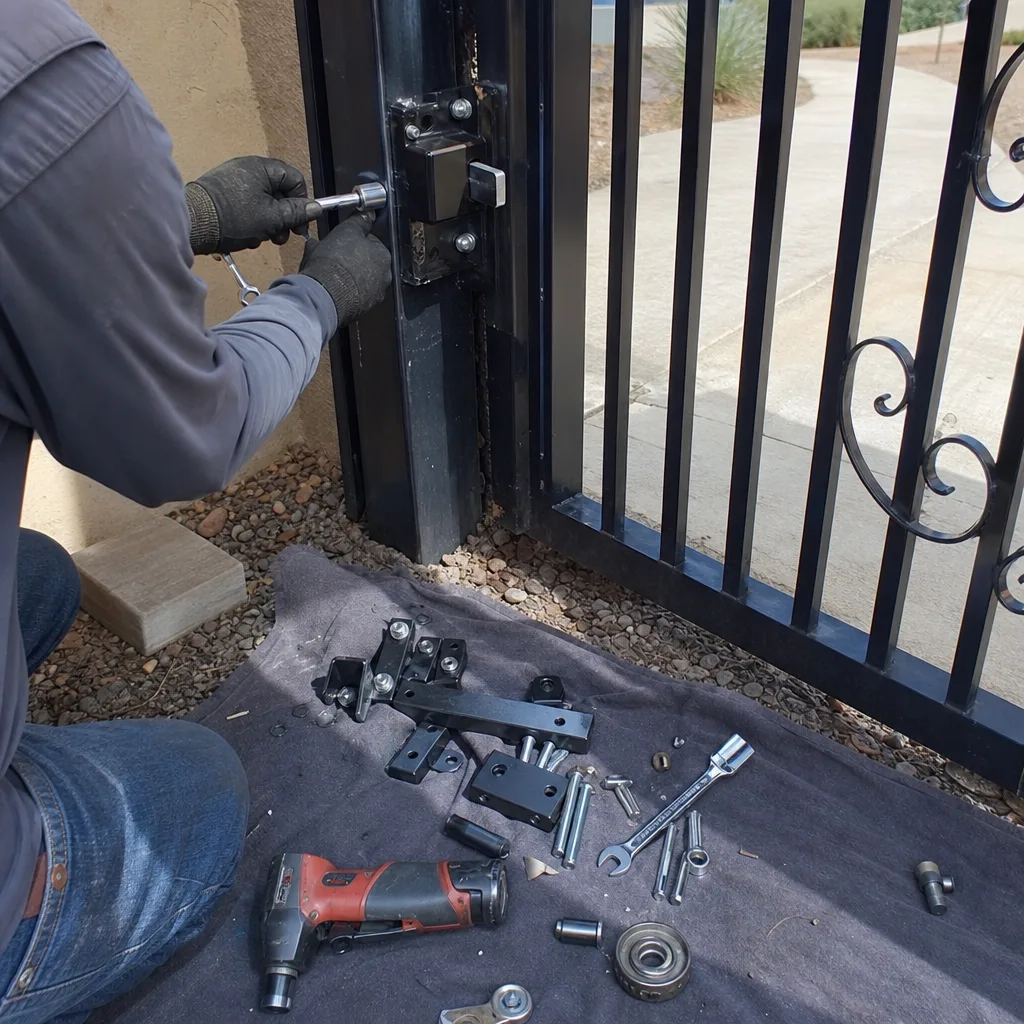
In Chandler, most gated communities and newer master-planned neighborhoods operate under a homeowners association with recorded Covenants, Conditions, and Restrictions (CC&Rs). These documents often contain gate specifications that exceed city code - and when they conflict, the stricter standard governs.
Common HOA gate restrictions that exceed city minimums:
- Maximum gate height of six feet where city code allows eight feet in side and rear yards.
- Prohibition of chain-link or certain metal finishes, requiring stuccoed masonry pillars or specific wood species.
- Setback requirements from the street or sidewalk that add distance beyond the city’s five-foot side yard standard.
- Color palette restrictions that limit operator housing and access control finishes.
- Prohibition of slide gates in favor of swing gates, or vice versa, for aesthetic uniformity.
- Requirement for architectural committee pre-approval before any gate modification, including operator replacement.
The legal hierarchy is straightforward: city code is the floor, not the ceiling. An HOA cannot permit what city code prohibits - you can’t build a nine-foot gate because your HOA allows it if Chandler caps residential gates at eight feet. But an HOA can prohibit what city code permits. If your CC&Rs ban slide gates and you install one anyway, the HOA can enforce removal through its standard violation process regardless of your city permit status.
We’ve worked in Chandler’s Sun Groves community where the HOA requires pre-approval for any gate operator replacement, even like-for-like. The architectural review takes 14 days and requires a vendor specification sheet. Homeowners who skip this step face a $200 fine and potential lien, even though no city permit was required. We build this timeline into our project planning and provide the specification documentation as part of our standard packet.
The practical advice: request your CC&Rs and any architectural guidelines before contacting contractors. Review the gate-specific sections yourself rather than relying on a contractor’s general assurance. If the HOA requires pre-approval, obtain it in writing before work begins. A city permit does not override private covenant enforcement.
Unpermitted Work and Homeowner Liability: Insurance and Legal Exposure
The question homeowners rarely ask until it’s too late: if someone is injured by my gate, and the work was done without required permits, what happens to my insurance coverage?
The answer depends on what the insurer knew or should have known, and whether the unpermitted work contributed to the injury. But the trend in Arizona case law and insurance practice is clear - unpermitted modifications that violate code or manufacturer specification create coverage gaps that homeowners bear personally.
How insurance carriers evaluate gate injury claims:
- Was the gate installation permitted and inspected? Carriers request permit records. Unpermitted work doesn’t automatically void coverage, but it shifts the burden of proof to the homeowner to demonstrate the work met code anyway.
- Did the installation comply with UL 325? Non-compliant safety device configuration is routinely cited as a contributing factor in injury claims, and some carriers exclude coverage for injuries involving known non-compliant installations.
- Was the work performed by a licensed contractor? Arizona requires a contractor’s license for any gate work exceeding $1,000 or involving electrical service. Unlicensed work may void your homeowner’s policy’s contractor liability extension.
- Did the homeowner know or should they have known of the defect? A gate that reverses inconsistently, has visible damage to safety edges, or lacks required signage creates “constructive knowledge” that can reduce or eliminate carrier indemnification.
In 2019, an Arizona appellate court upheld a summary judgment against a homeowner whose unpermitted gate installation lacked required photo-eyes. The child injured in the incident had triggered the gate’s closing cycle from inside the property; the gate struck her because no entrapment protection was installed. The homeowner’s carrier denied coverage based on the known code violation, and the court agreed the violation was material to the risk.
We’ve reviewed competitor estimates in Chandler where the scope explicitly excluded safety devices to hit a price point, with a note that “homeowner can add later.” This creates immediate liability exposure. Under our Haven Standard, we don’t offer scopes that omit required safety components. The written price includes everything needed for a compliant installation, and we document the safety device function before we leave.
The 365-Day Done Right Promise adds a layer of protection: if any repair we complete fails to perform as specified, we correct it at no charge. This includes safety device alignment, force settings, and control station function. A year is long enough to discover seasonal issues - in Chandler’s climate, thermal expansion affects gate travel and safety edge contact differently in July than in January.
How to Request a Chandler Inspection and What Inspectors Actually Check
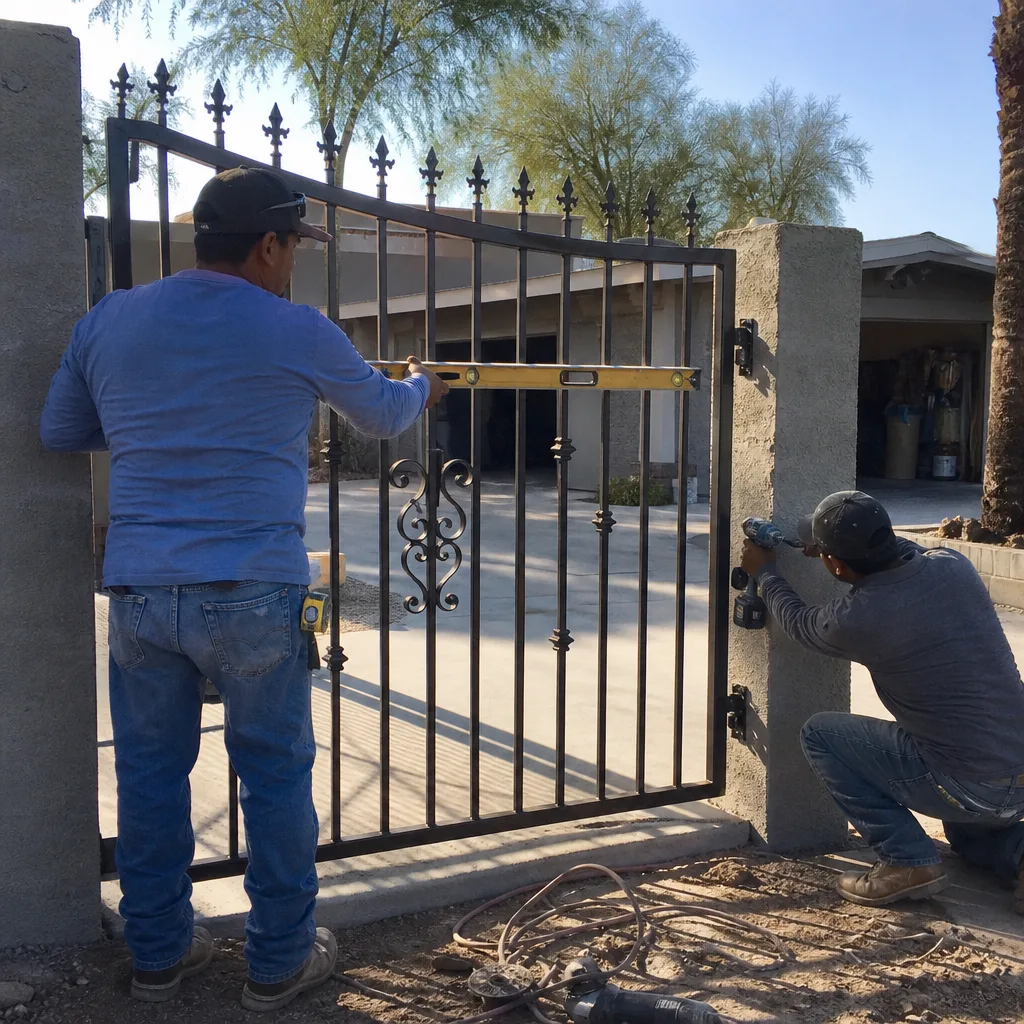
If your gate work required a permit, Chandler Development Services schedules inspections at rough-in and final stages. Understanding what inspectors verify - and what they don’t - helps you prepare and sets realistic expectations.
How to request inspection:
- Log into the Chandler Development Services portal with your permit number.
- Select “Request Inspection” and choose the appropriate type: typically “Electrical Final” for operator work with new service, or “Building Final” for structural gate modifications.
- Schedule at least 24 hours in advance; same-day requests are not guaranteed.
- Ensure the gate is operational and accessible, with clear path to electrical panels and safety devices.
- Have your approved plans and permit card on-site for inspector reference.
What Chandler inspectors verify:
- Gate location matches approved site plan, including setbacks from property lines and public right-of-way.
- Structural elements - posts, footings, gate frame - match approved details for size, depth, and material.
- Electrical work meets NEC requirements: proper grounding, GFCI protection where required, correct wire gauge and conduit.
- UL 325 safety devices are present, properly mounted, and functional - photo-eyes aligned, safety edges responding, force reversal operational.
- Emergency release accessible from outside the gate.
- Required signage visible and legible.
What inspectors do NOT verify:
- Operator brand compatibility with your specific gate weight and wind load - this is engineering, not code enforcement.
- Long-term durability of components or workmanship warranty terms.
- HOA compliance with architectural guidelines.
- Gate finish quality, paint coverage, or cosmetic welding appearance.
- Smartphone app function, remote programming, or integration with home automation systems.
We’ve accompanied inspections in Chandler’s Andersen Springs neighborhood where the inspector passed the electrical and safety device check but noted the gate’s closing force exceeded UL 325 limits under thermal load - the metal expanded in direct afternoon sun, increasing resistance. We adjusted the force setting, documented the change, and passed reinspection the next day. This is the value of having a technician present who understands both the code requirements and the local climate’s effect on gate performance.
Inspection fees are included in the original permit fee for the first two attempts. Third and subsequent inspections incur a $65 reinspection fee. Failed inspections must be corrected and rescheduled; work cannot be used until final approval.
What Documentation You Should Receive From Your Contractor
Permit status, code compliance, and liability protection all rest on documentation you can produce when asked. The contractor who leaves with a verbal “you’re all set” and no paperwork creates risk that surfaces years later.
Minimum documentation for any gate project:
- Written scope of work with specific parts, materials, and labor items listed individually.
- Written price, agreed and signed before work begins, with no open-ended terms.
- Permit application copy and inspection approval cards, if permits were required.
- Manufacturer specification sheets for the operator and all safety devices.
- UL 325 compliance verification, including force test results with date and technician signature.
- Warranty terms in writing, including duration, coverage scope, and claim procedure.
Under the Haven Standard, we exceed this minimum. Every Vance Gate Repair Chandler visit produces:
- A photographed record of pre-existing conditions - rust patterns, crack propagation, safety device condition before any work.
- Photos of all adjustments made - limit switch positions, photo-eye alignment, safety edge mounting.
- Part numbers and serial numbers of installed components.
- Wiring diagrams for any electrical work, annotated with wire colors and connection points.
- Commissioning test results, including force readings in pounds of pressure.
- The written price from Clause 1, the scope from Clause 2, and the evidence from Clause 4, assembled in a single packet left with the homeowner and filed in our job record.
This documentation habit comes from Adrian Vance’s commercial access-control background starting in 2014. Commercial sites require as-built drawings and maintenance records for security audits and insurance renewals. We applied the same discipline to residential work because the homeowner deserves the same protection as the facility manager.
If you’re evaluating contractors, ask to see a sample job record before you hire. A contractor who can’t produce one for a similar project likely won’t create one for yours.
Common Mistakes to Avoid
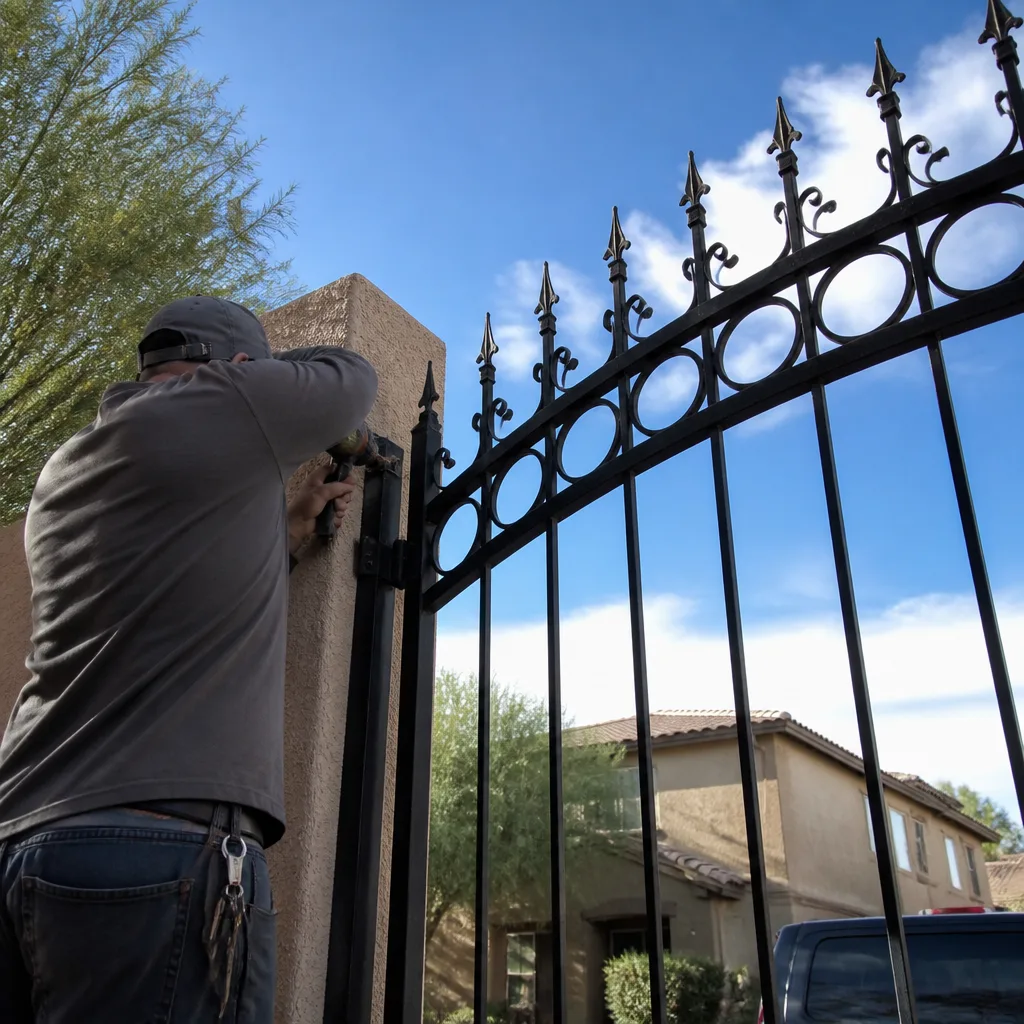
- Assuming repair never needs permits. In Chandler, replacing a rotted post with the same size and location is repair. Replacing it with a larger post or moving it six inches is modification. The distinction matters, and contractors who don’t know or don’t ask create stop-work risk.
- Letting the contractor pull the permit in their name alone. The permit should list you as the property owner with the contractor as the responsible party. If the contractor abandons the job, you need permit authority to hire a replacement without starting over.
- Ignoring HOA pre-approval requirements. We’ve seen Chandler homeowners complete full installations only to receive HOA violation notices requiring removal. The city permit doesn’t protect you from private covenant enforcement.
- Accepting a non-UL-listed operator to save money. Online marketplaces sell operators without UL 325 listing at 40% below market. The savings evaporate with the first injury claim, and insurance carriers increasingly recognize and exclude these installations.
- Not requesting inspection documentation. A contractor who says “it passed” but produces no signed inspection card may never have called for final inspection. Verify through the city portal with your permit number.
- Skipping the force test verification. UL 325 requires documented force testing at installation and after any adjustment. If your contractor doesn’t own a force gauge or won’t show you the reading, the safety system is unverified.
- Assuming all technicians are licensed. Arizona requires a contractor’s license for gate work over $1,000. Verify through the Arizona Registrar of Contractors website; unlicensed work voids certain insurance protections and eliminates access to the Recovery Fund.
When to Call a Professional
Call a licensed gate specialist when your project involves any structural modification, electrical service work, or automation of a previously manual gate - see our How to Hire a Gate Repair Contractor in Chandler: A Step-by-Step Guide for what to look for. Call when your HOA requires architectural pre-approval and you need specification documentation. Call when you’ve received a stop-work order or code violation notice and need a compliant path forward.
Call when your current gate shows inconsistent safety device function - intermittent photo-eye response, safety edges that trigger only on direct pressure, or force reversal that seems to vary with temperature. These are precursor conditions to entrapment incidents, and they’re outside the scope of homeowner maintenance.
Gate Repair in Chandler from Vance Gate Repair Chandler includes free estimates with written scope and price before any commitment. We review competitor estimates at no charge - bring your paperwork and we’ll flag permit requirements, code gaps, and missing safety components. Call (520) 827-3159; a live person answers 24 hours a day.
Frequently Asked Questions
No, if the replacement is like-for-like on existing posts and wiring. If the new motor requires structural changes, new electrical service, or significantly different mounting, permit verification is required. Call (520) 827-3159 for a free estimate and we’ll assess your specific configuration.
Residential gate permits typically run $85-$180 depending on project valuation and whether electrical inspection is included. Plan review takes 5-10 business days. This is separate from any HOA architectural review fees, which vary by community.
Chandler provides two included inspections with the permit fee. A failed inspection generates a correction notice with specific deficiencies. The contractor must correct and reschedule; a $65 reinspection fee applies from the third attempt onward. Work cannot be used until final approval.
Yes, if the CC&Rs contain specific gate restrictions. HOAs cannot override city code minimums, but they can impose stricter standards. Review your recorded CC&Rs and obtain written architectural approval before work begins.
Check for the holographic UL listing mark on the operator housing with a file number. Verify that safety devices are listed as compatible with your specific model. Request force test documentation from your installer. Under the Haven Standard, we provide this verification on every automated gate we service or install.
Keep the written scope, the signed price agreement, permit and inspection records, manufacturer specification sheets, UL 325 compliance verification, warranty terms, and any photographic documentation of the work. Vance Gate Repair Chandler provides all of this in a single packet on every job, with digital backup in our records.
The Bottom Line
Chandler gate permit requirements are narrower than most homeowners fear and more specific than most contractors disclose. Like-for-like repair and replacement generally need no permit; modifications to dimensions, structure, or electrical service do. UL 325 compliance is mandatory for all automated gates regardless of permit status. HOA guidelines can override city code when they’re stricter. Unpermitted work creates insurance and liability exposure that surfaces only after injury occurs. The protection is documentation - written scope, written price, permit records, and verified safety device function - delivered before work starts and left behind when the technician departs. For more guides & resources, visit our blog.
Written by Adrian Vance, Owner at Vance Gate Repair Chandler, serving Chandler since 2014.